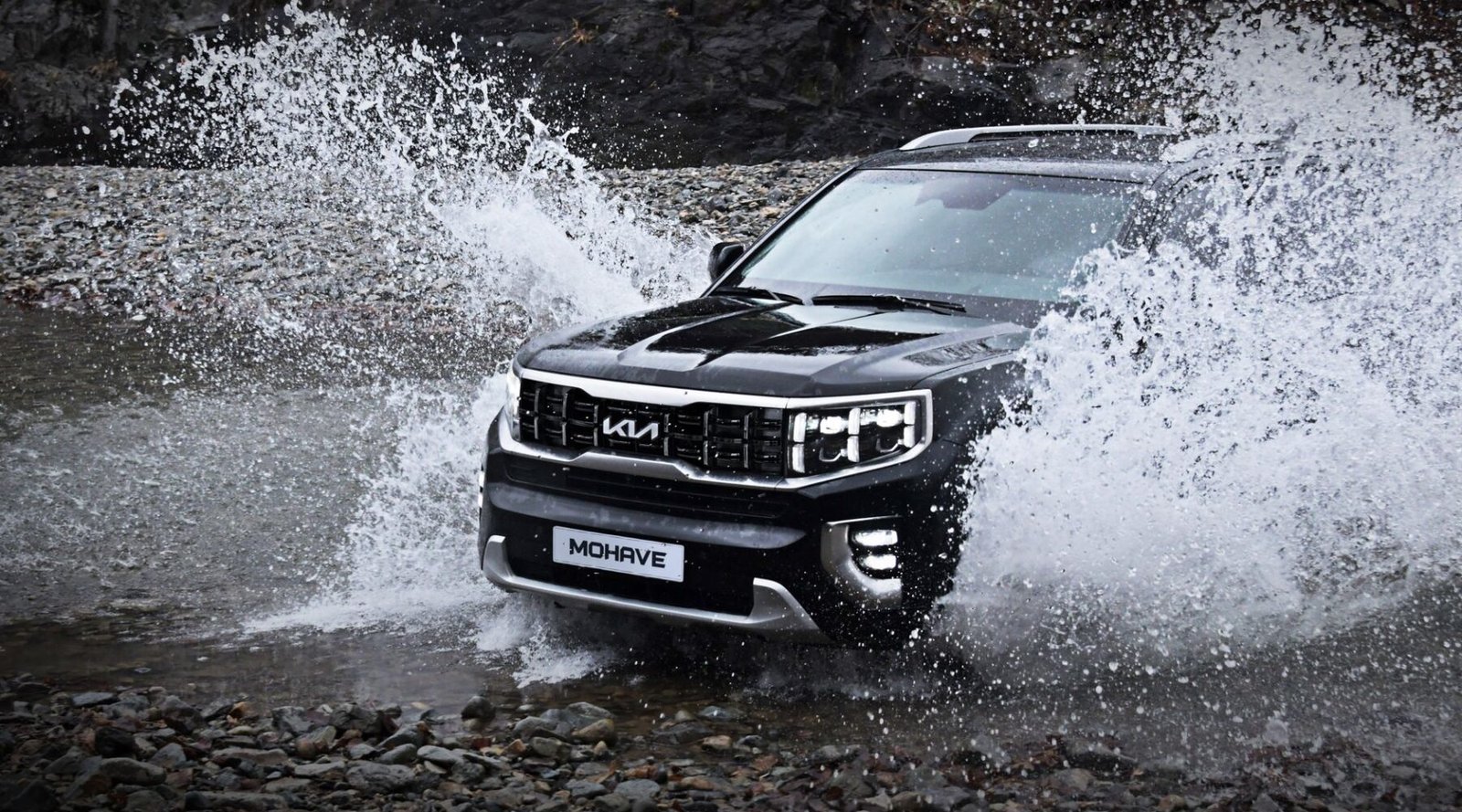
Front-wheel drive remains the standard configuration for modern passenger cars because it is compact, lightweight, and efficient to manufacture. Placing the engine and transmission directly over the driven wheels provides good straight-line stability and acceptable traction in basic commuting scenarios. However, front-wheel drive operates under severe mechanical constraints once dynamic forces interact. All-wheel drive does not merely add traction in low-grip environments. It fundamentally alters how engine power interacts with vehicle physics during weight transfer and cornering.
Managing weight transfer under acceleration
When any automobile accelerates, dynamic load shifts toward the rear of the chassis. In a front-wheel-drive vehicle, this weight transfer reduces the vertical force pressing the front tires into the road surface at the exact moment maximum engine torque is requested. As normal force on the front contact patches drops, tire slip increases, forcing traction control systems to cut engine power or apply braking force to maintain control.
All-wheel drive resolves this inherent limitation. By transferring engine torque to the rear axle during acceleration, the system sends propulsive force to the exact tires receiving the increased vertical load. Instead of fighting longitudinal weight transfer, all-wheel drive uses it to maximize forward acceleration. This allows a car to launch cleanly on low-friction surfaces like wet asphalt, unpaved roads, or steep inclines where front-wheel drive would spin its tires and lose momentum.
The physics of the friction circle
Every pneumatic tire operates within a physical limit known as the friction circle, which defines the total amount of force a tire can generate before slipping. This force is shared between lateral forces used for steering and longitudinal forces used for accelerating or braking. Front-wheel-drive vehicles ask two tires to perform both tasks simultaneously. Accelerating out of a sharp turn demands both longitudinal drive force and lateral cornering force from the same front contact patches. When torque exceeds available grip, the front tires slide, creating understeer.
All-wheel drive offloads longitudinal drive duties from the steering axle. By routing engine torque rearward, the system frees up tire grip at the front of the car.
Splitting longitudinal force across two axles preserves front-tire lateral capacity under power.
As a result, an all-wheel-drive system allows the front tires to focus on steering while the rear tires push the vehicle forward, allowing earlier throttle application when exiting a corner.
Vectoring torque to control vehicle yaw
Advanced all-wheel-drive systems go beyond simple front-to-rear power distribution by using mechanical center differentials or electronic twin-clutch rear drive modules to vector torque laterally. While front-wheel-drive cars can simulate torque vectoring by applying the inside front brake, this method dissipates energy through heat and reduces overall speed.
An all-wheel-drive system can actively send more mechanical torque to the outside rear tire under cornering loads. This creates a positive yaw moment that physically rotates the car around its center of mass, counteracting understeer under throttle. Front-wheel drive cannot generate this type of rotational force from the rear axle because the rear wheels are purely along for the ride.
All-wheel drive does not increase total braking traction or improve lateral cornering grip when coasting without power. Vehicle mass and tire compound remain the ultimate physical limits. However, under power, all-wheel drive executes dynamic torque distribution and chassis rotation that front-wheel drive cannot replicate.
Tire technology and its critical role in all-wheel drive systems
Tires are often the unsung heroes of vehicle dynamics, yet their interaction with the road surface fundamentally influences how all-wheel drive (AWD) systems perform. The physics of traction relies heavily on the characteristics of the tire, including its material composition, tread design, and inflation pressure. Understanding these aspects can provide deeper insights into the dynamics of AWD vehicles.
Modern tires are designed with a variety of compounds that optimize grip in different conditions. For instance, summer tires feature a softer rubber compound that enhances traction on dry pavement, while winter tires utilize a more flexible compound that remains pliable in cold conditions, improving grip on snow and ice. This compound variation is crucial when considering how an AWD system distributes power across all four wheels. Under varying conditions, the performance of the tires can significantly alter the effectiveness of the AWD system.
Tread design also plays a pivotal role in traction. Tires with deeper grooves and unique patterns can channel water away, reducing the risk of hydroplaning, while those with more solid tread surfaces excel in dry conditions. An AWD system that distributes torque to the wheels with the best grip can capitalize on these tread characteristics. For example, if a vehicle is equipped with all-season tires that offer balanced performance, the AWD system can provide a more stable driving experience in mixed conditions compared to a vehicle fitted with less suitable tires.
“The synergy between tire technology and AWD systems exemplifies how vehicle performance can be enhanced through thoughtful engineering.”
Inflation pressure also cannot be overlooked. Under-inflated tires can lead to increased rolling resistance, reduced fuel efficiency, and compromised handling. In an AWD vehicle, this can skew the power distribution and cause instability, particularly during aggressive maneuvers or on uneven surfaces. Proper tire maintenance ensures that the AWD system operates within its intended parameters, thus optimizing performance.
Real-world examples illustrate the importance of tire technology in AWD performance. Consider the Subaru Outback, known for its excellent AWD capabilities. The vehicle’s performance is enhanced when equipped with high-quality all-terrain tires that improve grip on loose surfaces. Conversely, if fitted with worn or low-quality tires, even a sophisticated AWD system can struggle, leading to decreased traction and increased likelihood of losing control.
The introduction of advanced tire technologies, such as run-flat tires and tire pressure monitoring systems, further augments the capabilities of AWD vehicles. Run-flat tires allow drivers to maintain control even after a puncture, enhancing safety and performance in critical situations. Meanwhile, tire pressure monitoring systems alert drivers to changes in tire pressure, enabling timely maintenance that preserves optimal contact with the road.
In summary, while AWD systems play a crucial role in enhancing vehicle dynamics and traction, the performance is heavily dependent on tire technology. The interaction between tires and the road surface defines how effectively an AWD system can direct power to the wheels, impacting overall vehicle control, safety, and performance. As the automotive industry continues to innovate in both AWD systems and tire technology, understanding these relationships will be vital for maximizing vehicle dynamics in varying driving conditions.
Impact of weight distribution on all-wheel drive performance
While all-wheel drive (AWD) systems are often lauded for their ability to enhance traction and improve vehicle dynamics, a critical yet frequently overlooked factor is the role of weight distribution. The balance of weight across a vehicle’s chassis has profound implications for how effectively an AWD system can deliver power to the wheels and maintain control during varying driving conditions.
Weight distribution, typically expressed as a percentage of the total vehicle weight on the front and rear axles, significantly affects a vehicle’s handling characteristics. Most vehicles are designed with a specific weight distribution in mind, which is optimal for performance under standard conditions. However, when an AWD system is introduced, the dynamics shift. An AWD vehicle with a front-heavy weight distribution may experience understeer, where the front wheels lose traction before the rear wheels, leading to a tendency to push wide in turns. Conversely, a rear-heavy distribution can exacerbate oversteer, where the rear wheels lose traction, causing the vehicle to rotate too much in a turn.
To illustrate this, consider the difference between a sports sedan and a crossover SUV. Sports sedans are typically designed with a near 50/50 weight distribution, enhancing stability and responsiveness in corners. When equipped with AWD, these vehicles can effectively distribute torque to all four wheels while maintaining their handling characteristics. This allows for precise cornering and reduced wheel slip, even on slick surfaces.
In contrast, many SUVs, especially those designed primarily for off-road use, often come with a rear-biased weight distribution. This configuration can lead to challenges when navigating slick conditions. For example, when accelerating out of a corner, the rear wheels may struggle for grip due to their lighter load, leading to potential loss of control unless the AWD system compensates effectively.
Moreover, the placement of key components such as the engine, transmission, and differential can further influence weight distribution. For instance, vehicles with front-mounted engines can shift weight forward, impacting the handling dynamics of an AWD system. Manufacturers are increasingly addressing this by strategically placing components to achieve a more neutral weight distribution, thereby enhancing overall performance.
Additionally, the role of active torque vectoring in modern AWD systems highlights the importance of weight distribution. By actively managing the distribution of torque between the front and rear axles, and even between the left and right wheels, these systems can dynamically adjust to the weight distribution as the vehicle corners or shifts weight during acceleration and braking. For example, during a hard turn, an active torque vectoring system can allocate more power to the outside wheels, helping to counteract the effects of weight transfer and maintain traction.
In summary, while all-wheel drive systems offer significant advantages in terms of traction and control, understanding the nuances of weight distribution is essential for optimizing their performance. Engineers must carefully consider this factor during the design phase to create vehicles that can harness the full potential of AWD technology, ensuring superior handling and safety across a variety of driving conditions.
Understanding the role of torque vectoring in all-wheel drive systems
Torque vectoring is an advanced feature in many modern all-wheel drive (AWD) systems that enhances vehicle dynamics by actively managing the distribution of torque between the front and rear axles and, in some cases, between individual wheels. This technology plays a crucial role in enhancing traction, stability, and handling, particularly in complex driving conditions. To appreciate the impact of torque vectoring, it is essential to understand how traditional AWD systems operate and the physics underlying them.
Traditional AWD systems generally distribute torque evenly between the front and rear axles. While this can provide adequate traction in various conditions, it does not account for differences in wheel slip or the varying levels of grip encountered by each wheel. For instance, when a vehicle enters a turn, the outside wheels travel a longer distance than the inside wheels. In a conventional AWD setup, the torque distribution remains constant, which can lead to understeer or loss of traction as power is sent to wheels that may already be losing grip.
Torque vectoring systems address this limitation by dynamically adjusting the torque sent to each wheel based on real-time feedback from wheel speed sensors, steering angle sensors, and yaw rate sensors. This allows the system to anticipate and respond to varying grip conditions, effectively optimizing traction and stability. For example, if the outside rear wheel begins to slip during a turn, the system can divert more torque to the inside rear wheel, which has better traction, thus enhancing cornering performance and reducing the likelihood of oversteer.
“By selectively distributing torque, torque vectoring systems significantly improve a vehicle’s responsiveness and stability, particularly in adverse conditions.”
One common implementation of torque vectoring is found in vehicles equipped with an electronically controlled differential, which can vary the torque between the left and right wheels on the same axle. This capability is particularly beneficial in scenarios where one wheel encounters a slippery surface, such as ice or mud, while the other wheel remains on a more stable surface. Instead of sending power to the slipping wheel, the system can redirect torque to the wheel with better grip, allowing the vehicle to maintain forward momentum and control.
In terms of performance, vehicles equipped with torque vectoring can exhibit vastly improved handling characteristics. For instance, the Acura MDX and the Audi Q7 both utilize torque vectoring to provide enhanced stability in both wet and dry conditions. During a test on a wet track, the Audi Q7 demonstrated a significant reduction in understeer compared to traditional AWD systems, allowing for quicker cornering and more precise control. Such improvements not only enhance the driving experience but also contribute to overall safety.
Furthermore, torque vectoring can also improve acceleration performance. In scenarios where rapid acceleration is required, such as merging onto a highway or navigating steep inclines, the system can optimize torque distribution to maximize traction, reducing wheel spin and enabling quicker launches. This is particularly evident in high-performance vehicles like the Tesla Model S, which employs an advanced torque vectoring system to deliver instantaneous torque to each wheel, resulting in remarkable acceleration times.
Ultimately, torque vectoring represents a significant advancement in the physics of traction and vehicle dynamics. By intelligently managing torque distribution, these systems not only enhance traction but also improve the overall driving experience, making vehicles safer and more enjoyable to drive in a variety of conditions. As automotive technology continues to evolve, the integration of such systems will likely become increasingly common, further blurring the lines between conventional and performance-oriented driving dynamics.
Related reading: Analyzing the empirical performance gap between winter and all-season tires, and New vs. Used: How to Actually Decide. For an outside reference on this topic, see Consumer Reports' car-buying advice.

3 Responses