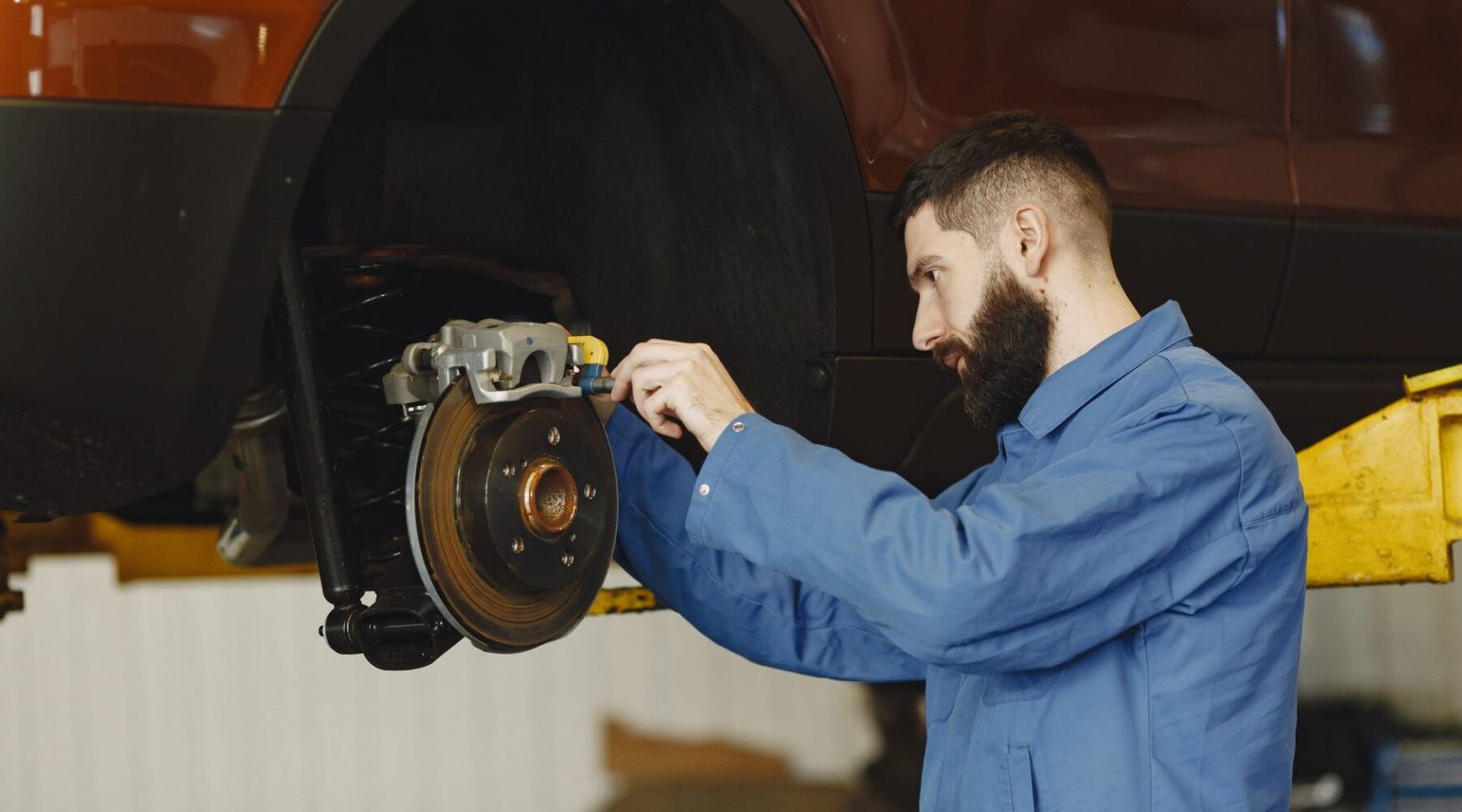
Modern brake friction materials represent a carefully engineered balance of chemical compounds, structural fibers, and binding agents. Converting kinetic energy into thermal energy requires materials capable of withstanding extreme pressure and temperatures exceeding one thousand degrees Fahrenheit. The industry classifies light-vehicle friction compounds into three primary categories: non-asbestos organic, semi-metallic, and ceramic. Each formulation exhibits distinct mechanical characteristics that directly govern stopping consistency, pedal modulation, thermal degradation, and acoustic noise.
The mechanical composition of common friction compounds
Non-asbestos organic pads rely on soft materials including glass, rubber, Kevlar, and high-temperature resins. These compounds offer gentle engagement, quiet operation, and minimal rotor wear, but they break down quickly under sustained thermal stress. Semi-metallic pads incorporate thirty to sixty-five percent metal by weight, utilizing steel wool, iron powder, and copper to transfer heat away from the contact patch. This metallic matrix delivers superior cold bite and exceptional resistance to thermal fade, though it accelerates rotor wear and produces noticeable brake dust.
Ceramic pads utilize dense ceramic materials blended with non-ferrous fill materials and fine copper fibers. Engineered as a clean alternative to semi-metallic options, ceramic formulations maintain a stable friction output across broad temperature windows while generating minimal dust and low acoustic vibration. However, under extreme track environments or heavy commercial towing, semi-metallic compounds still offer superior sheer heat dissipation capabilities.
Friction coefficients and real-world stopping performance
A widespread misconception in automotive tuning is that high-friction brake pads directly reduce single-stop emergency braking distances. On a dry surface during an initial stop, maximum stopping distance is limited by tire adhesion and anti-lock braking system calibration rather than pad material. If a brake pad generates sufficient force to trigger the anti-lock system, installing a higher-friction compound will not shorten that single stop.
The true performance divergence occurs during repeated heavy deceleration, high-speed stops, or downhill driving. Under these conditions, friction materials experience thermal fade as resins melt and gases form between the pad and rotor surface. Semi-metallic compounds maintain a high friction coefficient, typically rated between 0.38 and 0.50, remaining stable even as rotor temperatures climb past eight hundred degrees Fahrenheit. Organic pads suffer severe friction degradation under similar heat loads, dropping their coefficient of friction significantly and increasing the required pedal force and physical stopping distance.
Peak friction value matters less than friction stability across the operational temperature range of the vehicle.
Acoustic frequency and the mechanics of brake noise
Brake noise is not simply an aesthetic nuisance; it is high-frequency mechanical vibration. When a pad presses against a rotating cast-iron rotor, micro-interlocking between the surfaces creates a continuous stick-slip phenomenon. This friction variation excites the rotor, caliper, and suspension components, producing audible squeal when the vibration frequency lands between one thousand and twenty thousand Hertz.
Semi-metallic pads are inherently more susceptible to brake squeal due to the high modulus of elasticity in their metallic fibers. Hard steel fibers scrape against the iron rotor face, exciting high-frequency resonance. Ceramic pads mitigate this issue in two ways. First, ceramic matrix materials dampen microscopic structural vibrations before they radiate into the caliper body. Second, ceramic compounds deposit a uniform transfer film onto the rotor face, smoothing micro-abrasions and altering the contact interface to keep vibrational frequencies outside the range of human hearing.
Selecting the optimal pad material requires evaluating operational demands against acceptable noise levels. For daily passenger driving, ceramic compounds deliver silent operation and consistent friction. For track driving or heavy haulage, semi-metallic pads provide the thermal durability necessary to prevent brake failure, accepting acoustic noise as an inevitable trade-off of high-temperature performance.
Pads are one half of a car’s stopping ability; the tires touching the road are the other, and our guide to winter versus all-season tire performance covers that side of it. If you want to see pad fade in a controlled setting rather than take our word for it, our story on what a track day teaches you about your daily driver is where we learned most of this firsthand. NHTSA’s brake safety resources cover the regulatory side.
Advancements in brake pad material technology
The evolution of brake pad compounds has been significantly influenced by advancements in material science. Modern brake pads are crafted using a variety of materials that not only enhance stopping power but also minimize noise and wear. The shift from traditional organic materials to more advanced formulations such as semi-metallic and ceramic compounds reflects a growing understanding of the interaction between pad materials and braking systems.
Semi-metallic brake pads, typically composed of 30-65% metal fibers, are known for their excellent heat dissipation and durability. These pads perform exceptionally well under high-temperature conditions, making them a popular choice for performance vehicles and heavy-duty applications. However, they can produce more noise and dust compared to their organic counterparts, prompting manufacturers to innovate with sound-dampening technologies.
Ceramic brake pads have gained traction due to their quieter operation and reduced dust production. These pads are composed of a ceramic material mixed with non-ferrous fillers, which results in a softer, quieter braking experience. They maintain consistent performance across a wide range of temperatures and are less prone to fade, making them ideal for daily drivers. For instance, brands like Akebono have developed premium ceramic pads that boast superior stopping power while maintaining a low noise profile, catering to the growing consumer demand for comfort and performance.
“The choice of brake pad material significantly influences not only the stopping power but also the overall driving experience.”
The innovation doesn’t stop at just the compounds used. Manufacturers are also focusing on the production process itself. For example, the application of advanced molding techniques has led to more uniform density and improved bonding within the brake pad. This results in enhanced performance and longevity. Additionally, some brands are incorporating additives such as aramid fibers and various polymers to improve heat management and noise reduction. These developments are pivotal for hybrid and electric vehicles, where regenerative braking systems require brake pads that can handle unique performance demands.
Moreover, the role of temperature management in brake pad performance cannot be overstated. The thermal characteristics of brake pad materials determine how effectively a vehicle can stop under varying conditions. For example, high-performance racing pads are engineered to operate at peak efficiency at elevated temperatures, providing maximum grip without degradation. Conversely, some all-weather pads are designed to maintain effectiveness across a broader temperature range, making them more versatile for everyday use.
As consumers become more discerning about the performance and comfort of their vehicles, the brake pad market is witnessing a shift towards hybrid compounds that combine the best attributes of various materials. This trend mirrors the automotive industry’s broader movement towards sustainable and efficient technologies. Brands are increasingly exploring bio-based materials and recycled components, aiming to reduce environmental impact while maintaining high performance standards.
In conclusion, the ongoing advancements in brake pad material technology not only enhance stopping performance but also address concerns related to noise and environmental sustainability. As vehicle technology continues to evolve, the development of brake pads will play a crucial role in the overall safety and comfort of modern driving experiences.
Understanding the nuances of friction materials
When it comes to brake pad performance, the material composition is paramount, but the nuances of friction materials can significantly influence both stopping power and acoustic behavior during braking. Friction materials can be broadly categorized into two types: organic (non-asbestos organic, or NAO) and metallic (semi-metallic and fully metallic). Each type offers distinct advantages and disadvantages regarding performance characteristics.
Organic brake pads, made from a mixture of fibers, fillers, and bonding agents, are known for their quieter operation and reduced wear on rotors. However, their ability to dissipate heat is limited compared to metallic pads, which can lead to brake fade under heavy use. This is particularly critical for high-performance applications where rapid stopping power is essential.
On the other hand, metallic brake pads are composed of metal shavings, fibers, and other materials that enhance their thermal conductivity. This composition allows them to maintain performance under extreme conditions, making them ideal for racing and heavy-duty applications. However, they can produce more noise and dust, which can affect vehicle cleanliness and occupant comfort. The challenge for manufacturers is to strike a balance between performance and noise, and innovative formulations are key.
“The choice of brake pad material can significantly influence a vehicle’s overall safety and comfort. Manufacturers are increasingly focused on developing friction materials that meet specific performance criteria without compromising on noise levels.”
Recent advancements in material science have led to the development of hybrid brake pads that blend the benefits of both organic and metallic compounds. For example, incorporating aramid fibers into a semi-metallic formulation can enhance its noise-dampening properties while retaining the thermal stability associated with metallic pads. This hybrid approach not only improves stopping performance but also addresses the acoustic challenges that can arise from traditional metallic pads.
Furthermore, ongoing research into eco-friendly materials is gaining traction. Manufacturers are exploring the use of bio-based resins and natural fibers as alternatives to conventional synthetic materials. These new formulations not only exhibit competitive performance characteristics but also reduce environmental impact, aligning with the automotive industry’s shift towards sustainability. Early adopters of these eco-friendly brake pads have reported satisfactory performance metrics, including reduced noise and effective heat dissipation.
Testing and standardization practices are also evolving to better assess the performance of these complex brake pad compounds. The Society of Automotive Engineers (SAE) has established specific testing protocols to evaluate not just stopping distances and fade resistance but also noise levels during operation. This comprehensive approach helps manufacturers refine their formulations and gives consumers clearer insights into the performance characteristics of different products.
As the market for high-performance braking systems continues to grow, understanding the subtleties of brake pad compounds will be essential for both consumers and professionals in the automotive field. By paying attention to the specific material compositions and their implications on performance and noise, stakeholders can make informed decisions that enhance vehicle safety and driver satisfaction.
Understanding the impact of moisture on brake pad performance
Brake pad compounds are not only influenced by their material makeup but also by environmental factors, particularly moisture. The presence of water can significantly affect the friction characteristics of brake pads, leading to variations in stopping performance and noise generation. In wet conditions, the interaction between the brake pad and rotor can be altered, resulting in a phenomenon known as ‘brake fade.’ This occurs when the brake pads lose their effectiveness due to overheating and moisture interference, impacting stopping distances and safety.
When brake pads are exposed to moisture, the film of water created on the rotor surface can reduce friction. This is particularly evident in organic and semi-metallic brake pad formulations, which may not perform optimally when wet. For instance, certain organic compounds are known to absorb moisture, leading to a phenomenon called ‘hydroplaning’ where the pads fail to grip the rotor effectively. This can be especially problematic for vehicles that operate in regions with high humidity or frequent rain, where consistent stopping power is essential.
“Moisture can dramatically alter the performance of brake pads, highlighting the need for material engineering that accounts for environmental factors.”
Moreover, the type of rotor material can also play a significant role in how moisture impacts braking performance. For example, cast iron rotors, which are common in many vehicles, tend to perform better in wet conditions compared to carbon-carbon composites used in high-performance applications. This disparity can lead to a mismatch in performance expectations for drivers who may switch between vehicle types or who operate in variable weather conditions.
To mitigate the adverse effects of moisture, manufacturers are increasingly focused on developing advanced brake pad compounds that maintain consistent performance across a range of environmental conditions. Some newer formulations incorporate hydrophobic agents that repel water, ensuring that the contact surface remains effective even in wet conditions. Additionally, testing these compounds under simulated wet conditions during the development phase can help ensure that they meet performance standards across diverse operating environments.
Furthermore, the impact of moisture on brake pad performance extends to noise generation. Wet conditions can exacerbate the squeaking or squealing that some brake pads produce. This is particularly relevant for those using less expensive organic compounds, which may not be engineered to minimize noise in variable conditions. Understanding this interaction is essential for drivers who prioritize a quiet ride and may help inform their brake pad selection.
“Drivers should be aware that not all brake pads perform equally in wet conditions; selection based on material science can lead to safer and quieter driving experiences.”
As the automotive industry pushes towards performance-oriented brake systems, awareness of how moisture influences brake pad function will become increasingly crucial. Engineers must not only focus on the raw materials but also on how these materials interact with environmental factors. Future innovations may include smart brake systems that can detect moisture levels and adjust braking force accordingly, further enhancing safety and performance. In conclusion, understanding the role of moisture in brake pad performance can empower consumers to make informed choices, ensuring that their vehicles deliver reliable stopping power and minimal noise across all driving conditions.


5 Responses