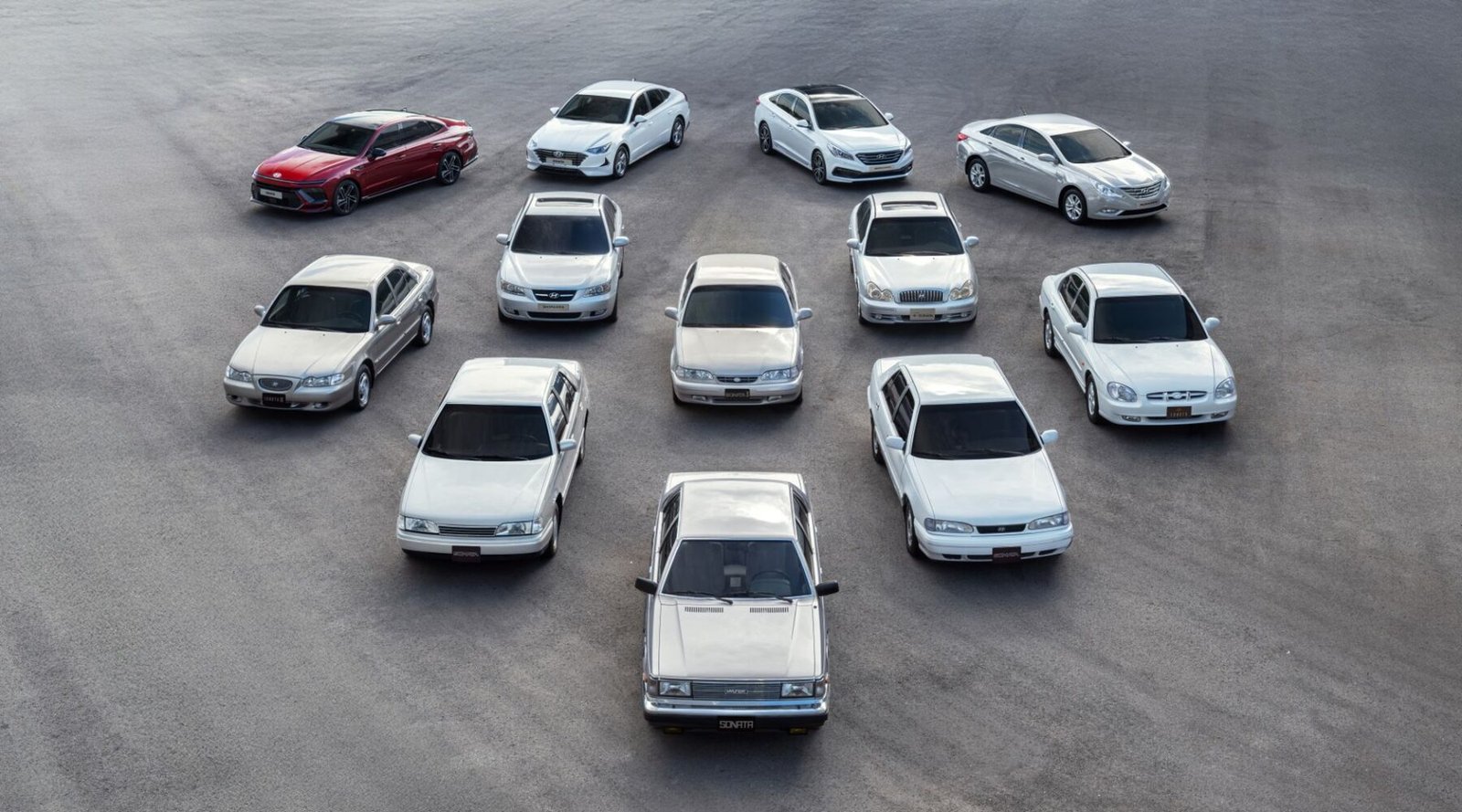
The 2006 Hyundai Sonata stands out in the competitive midsize sedan market, appealing to buyers looking for reliability and value. This model year marked a significant evolution for Hyundai, offering a blend of comfort, style, and advanced features that made it a strong contender against established rivals.
Overview of the 2006 Hyundai Sonata
The 2006 Sonata was part of the fourth generation, which began in 2005 and continued through 2010. This generation introduced a more refined design and upgraded features compared to its predecessors. The Sonata was available in several trims, including GL, GLS, and Limited, each offering a range of options and amenities to cater to different buyer preferences.
Exterior Design and Dimensions
The exterior of the 2006 Sonata was designed with a more modern aesthetic, featuring a sleeker profile and a distinctive front grille. With dimensions measuring approximately 184 inches in length, 71 inches in width, and 57 inches in height, the Sonata offered a spacious cabin without being overly large. The car’s wheelbase of 107 inches contributed to its stable ride and handling.
Interior Features and Comfort
The interior of the 2006 Sonata was designed with driver and passenger comfort in mind. The spacious cabin offered ample headroom and legroom for both front and rear passengers. Standard features included air conditioning, full power accessories, and a six-speaker audio system. Higher trims added luxury elements such as leather seating, a sunroof, and an upgraded audio system with a CD changer.
Performance and Engine Options
The 2006 Sonata was available with two engine options. The base model featured a 2.4-liter inline-four engine that produced 138 horsepower and 136 lb-ft of torque. For buyers seeking more power, a 3.3-liter V6 engine was also available, delivering 234 horsepower and 226 lb-ft of torque. Both engines were mated to either a five-speed manual or a five-speed automatic transmission, providing a smooth driving experience.
Fuel Economy and Efficiency
Fuel efficiency was one of the key selling points for the 2006 Sonata. The four-cylinder engine achieved an EPA rating of approximately 24 mpg in the city and 34 mpg on the highway, making it a cost-effective choice for daily commuting. The V6 engine, while slightly less efficient, still offered respectable fuel economy figures of around 20 mpg in the city and 29 mpg on the highway.
Safety Features and Ratings
Safety was a priority for Hyundai with the 2006 Sonata. The sedan came equipped with standard safety features such as front and side airbags, anti-lock brakes, and electronic stability control. The National Highway Traffic Safety Administration (NHTSA) awarded the Sonata a five-star rating for frontal crash protection, making it a reliable option for safety-conscious buyers.
Reliability and Maintenance
Hyundai has built a reputation for producing reliable vehicles, and the 2006 Sonata is no exception. Owners have reported low maintenance costs and fewer issues compared to competitors in the same class. Regular maintenance, including oil changes and brake inspections, can help ensure the longevity of this model. Hyundai also backed the Sonata with a five-year/60,000-mile warranty, giving buyers added peace of mind.
Market Value and Resale Considerations
As a used vehicle, the 2006 Sonata offers excellent value for budget-conscious buyers. Prices can vary significantly based on condition, mileage, and trim level, but generally, it remains an affordable option in the used midsize sedan market. Given its reliability and low operational costs, the Sonata tends to hold its value well compared to other vehicles in its class.
Conclusion: Is the 2006 Sonata Right for You?
The 2006 Hyundai Sonata is a compelling choice for those seeking a reliable, comfortable, and economically friendly midsize sedan. With its array of features, solid performance, and commendable safety ratings, it has much to offer. As you consider your options, it is worthwhile to explore various listings to find one that meets your needs.
Interested in This Car?
If you are considering this vehicle, you can check its current availability, pricing and purchase options from the seller.
Interested in This Car?
If you are considering this vehicle, you can check its current availability, pricing and purchase options from the seller.
Safety features and recalls of the 2006 Sonata
The 2006 Hyundai Sonata stands out in its class not only for its value but also for its commitment to safety. It earned a five-star rating in government crash tests and offers a range of safety features that were competitive for its time. However, potential buyers should be aware of specific safety recalls and issues that could impact their purchase decisions.
Standard safety features on the 2006 Sonata include front-seat side airbags, full-length curtain-type airbags, and electronic stability control. These features were designed to provide a comprehensive safety net, significantly enhancing occupant protection in the event of a collision. The Sonata’s robust frame and crumple zones also contribute to its overall crashworthiness.
According to the National Highway Traffic Safety Administration (NHTSA), the 2006 Sonata’s safety features contributed to its commendable crash test ratings.
However, buyers should be vigilant about recalls. The 2006 Sonata was subject to a few notable recalls, primarily concerning the anti-lock braking system (ABS) and potential problems with the vehicle’s electrical system. Specifically, the ABS may have experienced issues that could lead to unintended activation, which could compromise vehicle control. Additionally, some vehicles faced electrical problems that could result in malfunctioning headlights or other critical components.
It’s advisable for buyers to check the vehicle identification number (VIN) against the NHTSA database to verify if any recalls have been addressed. If an affected vehicle has not undergone the necessary repairs, it is crucial to factor this into the negotiation process or consider seeking a different unit that has been properly serviced.
Moreover, while the Sonata’s safety ratings are impressive, real-world performance can vary based on maintenance and driving habits. Prospective buyers should consider obtaining a vehicle history report to uncover any past accidents or repairs that might influence the car’s safety and reliability.
Safety is paramount. A thorough inspection by a qualified mechanic can also reveal any hidden issues that may not be apparent during a casual test drive.
In conclusion, while the 2006 Hyundai Sonata offers a solid foundation of safety features and ratings, potential buyers should remain informed about recalls and maintenance history. This diligence will ensure that they make a well-rounded decision, prioritizing both safety and reliability in their vehicle choice.
Engine options and their implications for reliability
The 2006 Hyundai Sonata offers two main engine choices that significantly influence its performance, fuel efficiency, and long-term reliability. The base model comes equipped with a 2.4-liter inline-4 engine, while higher trims feature a more powerful 3.3-liter V6. Understanding these options is crucial for potential buyers who want to align their purchase with their driving needs and maintenance expectations.
The 2.4-liter four-cylinder engine produces 162 horsepower and delivers commendable fuel efficiency, averaging around 24 miles per gallon in the city and 34 on the highway. This engine is well-suited for daily commuting and provides adequate power for city driving. However, some owners report that it can feel underpowered during highway merging or when fully loaded with passengers and cargo.
“While the four-cylinder engine is reliable, buyers who prioritize performance might find it lacking during high-speed maneuvers or steep inclines.”
On the other hand, the 3.3-liter V6 engine generates 234 horsepower, offering a noticeable boost in acceleration and responsiveness. This engine is ideal for buyers who often travel with multiple passengers or tackle hilly terrain, as it provides a more robust driving experience. However, owners should be aware that the V6 variant has a slightly lower fuel economy, averaging around 20 miles per gallon in the city and 28 on the highway. This trade-off can add to long-term fuel costs, which is an important consideration for budget-conscious buyers.
In terms of reliability, both engines have displayed a strong track record, particularly when regular maintenance is performed. The four-cylinder engine tends to have fewer issues reported over time, with many owners experiencing minimal problems even after several years of use. Conversely, the V6 engine, while still reliable, has been associated with a few more maintenance concerns, particularly regarding the timing belt and water pump, which should be inspected or replaced at regular intervals to prevent costly repairs.
“A well-maintained Sonata, regardless of the engine choice, can easily surpass 150,000 miles, but the maintenance history should be a key factor in any purchase decision.”
Another factor that buyers should consider is the transmission options available. Both engines are paired with a five-speed automatic transmission, which generally receives positive reviews for smooth shifting and responsiveness. However, some owners have reported occasional transmission issues, particularly as the vehicle ages. It’s advisable to test drive any potential purchase and pay attention to how the transmission performs during different driving conditions.
In conclusion, understanding the implications of the engine choices in the 2006 Hyundai Sonata is essential for buyers. The four-cylinder engine offers a practical and economical option for everyday driving, while the V6 caters to those seeking enhanced performance. Regardless of the choice, prospective buyers should prioritize vehicles with a documented maintenance history to ensure long-term reliability and performance.
Understanding the engine options and their implications
The 2006 Hyundai Sonata offers two different engine options: a 2.4-liter inline-four and a 3.3-liter V6. Each engine provides distinct advantages and considerations that potential buyers should carefully evaluate.
The 2.4-liter engine produces 138 horsepower and 136 lb-ft of torque, which may suffice for daily commuting and light driving. It is paired with either a five-speed manual or a five-speed automatic transmission. This engine is recognized for its fuel efficiency, boasting an EPA rating of approximately 24 mpg in the city and 32 mpg on the highway. For buyers prioritizing cost-effective daily driving, the four-cylinder engine can be an appealing choice due to its lower operating costs.
However, prospective buyers should also consider the performance limitations of the four-cylinder when it comes to highway merging or carrying heavier loads. In contrast, the 3.3-liter V6 engine significantly enhances the Sonata’s performance, delivering 249 horsepower and 229 lb-ft of torque. This engine is exclusively paired with a five-speed automatic transmission, providing a smoother and more responsive driving experience.
“The V6 engine not only improves acceleration but also contributes to a more refined driving experience, particularly on longer trips.”
While the V6 enhances performance, it comes at the cost of fuel efficiency, yielding an EPA rating of about 19 mpg in the city and 28 mpg on the highway. Buyers should weigh their priorities: if spirited driving and greater power are essential, the V6 may justify the higher fuel consumption. On the other hand, for those focused on maximizing fuel economy, the four-cylinder remains a practical option.
Additionally, buyers should be aware of the potential for engine-related issues as the Sonata ages. The four-cylinder engine has been noted for its durability, but reports of timing belt replacement around the 100,000-mile mark should be anticipated. Conversely, the V6 engine can be more susceptible to issues such as oil leaks and engine knock if not properly maintained. Regular oil changes and attentive maintenance can mitigate most of these concerns, but it’s worth reviewing service records when considering a used model.
Another aspect to consider is the Sonata’s overall driving dynamics, which can differ notably between the two engines. The V6 model provides more robust acceleration and improved handling, making it a better option for buyers who value performance. The four-cylinder, while adequate, may feel sluggish under heavy acceleration, particularly when fully loaded with passengers and cargo.
In summary, the choice between the 2.4-liter inline-four and the 3.3-liter V6 engine can significantly impact the driving experience, fuel economy, and maintenance considerations of the 2006 Hyundai Sonata. Prospective buyers should align their choice with their driving habits and priorities, ensuring a satisfactory ownership experience in the long run.
Engine options and reliability insights
The 2006 Hyundai Sonata was available with two engine options: a 2.4-liter inline-four and a more powerful 3.3-liter V6. Understanding these options is crucial for potential buyers, as they significantly influence the vehicle’s performance, fuel economy, and maintenance costs.
The base engine, a 2.4-liter four-cylinder, produces 162 horsepower and is paired with a five-speed automatic transmission. While this engine provides adequate power for daily driving, it may feel underwhelming for those seeking a more spirited driving experience. However, it boasts impressive fuel economy, averaging around 24 mpg in the city and 34 mpg on the highway. This makes the four-cylinder Sonata an appealing choice for budget-conscious buyers prioritizing efficiency.
On the other hand, the 3.3-liter V6 engine offers a significant boost in performance, generating 234 horsepower. This engine is mated to a five-speed automatic transmission, providing a smoother and more dynamic driving experience. With a 0-60 mph time of approximately 7.5 seconds, the V6 Sonata can compete with many midsize sedans in terms of performance. However, this power comes at the cost of fuel economy, with the V6 averaging around 21 mpg in the city and 30 mpg on the highway. Buyers should weigh their preferences for power against their fuel economy needs when choosing between these two engines.
In terms of reliability, the 2006 Sonata has received generally positive reviews. Hyundai’s reputation for building durable vehicles has been bolstered by the Sonata’s track record. The National Highway Traffic Safety Administration (NHTSA) awarded the 2006 Sonata a five-star overall crash-test rating, indicating strong structural integrity and safety features that contribute to its reliability.
However, it is essential for potential buyers to be aware of some common issues reported by existing owners. The most notable of these include problems with the automatic transmission, particularly in models equipped with the V6 engine. Some users have reported rough shifting or delayed engagement, which can be attributed to worn transmission components. Regular maintenance, including fluid changes and inspections, can help mitigate these issues.
“It’s crucial to check the transmission fluid level and condition regularly, especially in older models. If the fluid appears dark or has a burnt smell, it may indicate potential transmission problems that need to be addressed.”
Another common concern involves the electrical system, particularly the dashboard lights and power windows. Some Sonata owners have experienced issues with faulty window regulators and malfunctioning instrument panels. These problems can typically be resolved through replacement parts, but they may add to the overall maintenance costs.
Before purchasing a used 2006 Sonata, it is advisable to conduct a thorough inspection, preferably with the help of a trusted mechanic. This can help identify any existing issues and provide peace of mind regarding the vehicle’s condition. Additionally, reviewing the vehicle’s service history can offer insight into how well it has been maintained over the years.
In summary, the 2006 Hyundai Sonata presents a solid choice for buyers seeking a reliable midsize sedan with reasonable fuel economy and a range of features. By understanding the differences between the engine options and being aware of potential reliability concerns, buyers can make a more informed decision that aligns with their driving needs and budget.
Related reading: The high-capacity SUVs leading their classes in cargo volume, and Proven used SUVs worth buying in today’s market. For an outside reference on this topic, see Consumer Reports' car-buying advice.