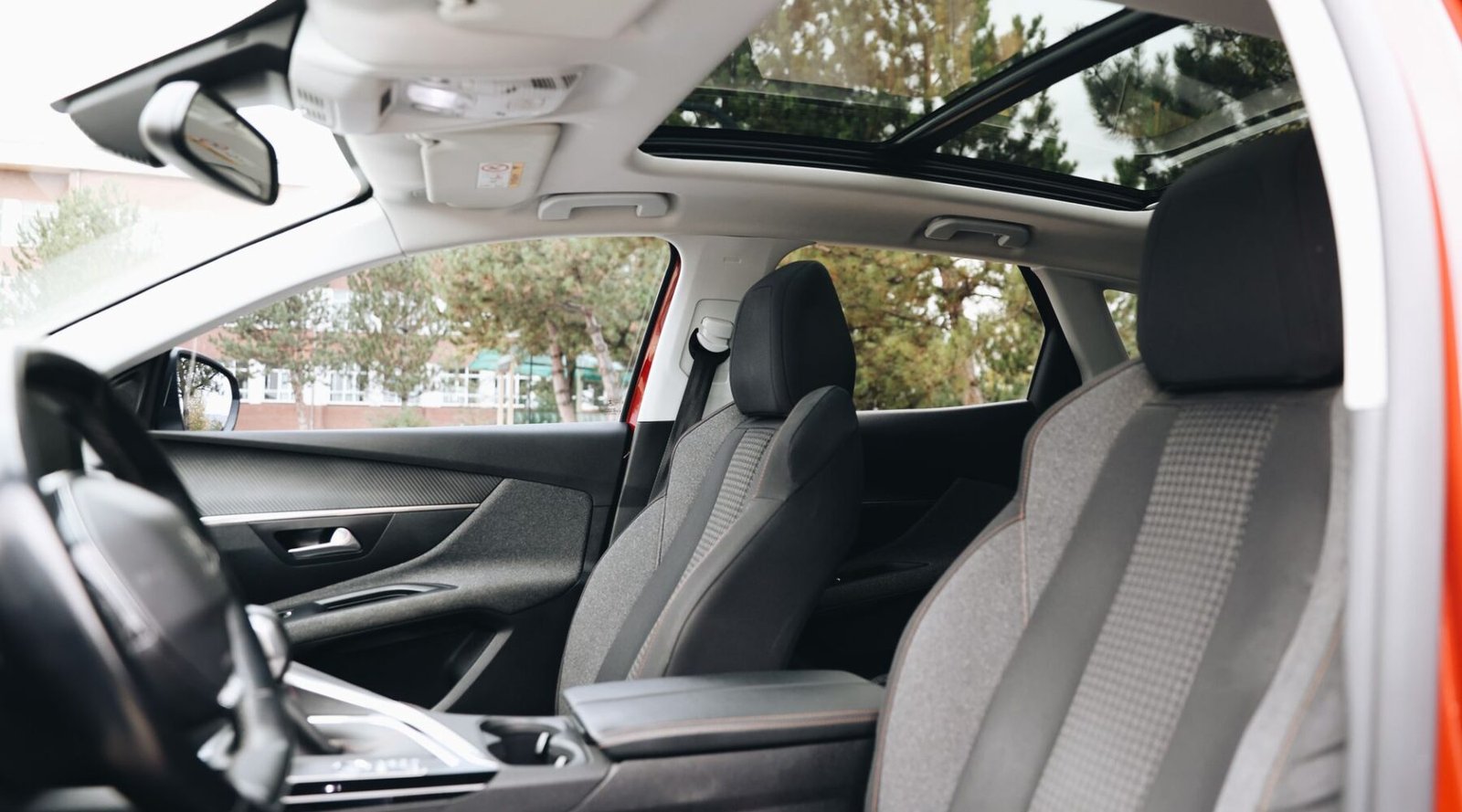
Finding the right vehicle for drivers over six feet tall requires looking beyond advertised legroom and headroom metrics. Pure dimensions listed on spec sheets often fail to capture seat track travel, steering wheel tilt and telescoping range, or the intrusion of panoramic glass roofs. True comfort for tall drivers stems from balanced interior architecture that accommodates longer limbs while maintaining optimal sightlines to the instrument cluster and road.
Understanding cabin geometry beyond raw spec sheets
Headroom specifications are routinely measured from the seat base to the headliner, but this number changes drastically once a driver adjusts the seat height and backrest angle. Sunroofs and moonroofs frequently strip one to two inches of vertical clearance directly above the driver head. For drivers six-foot-four and taller, selecting a base trim without a sunroof often yields more functional headroom than a range-topping trim with a glass roof.
Pedal placement and center console width are equally critical. A cabin may offer generous legroom on paper, yet a wide center console can pin the driver right knee at an uncomfortable angle. Likewise, limited telescoping range in the steering column forces tall drivers to choose between reaching for the wheel or cramming their legs under the dashboard. Optimal ergonomics require a deep seat track, vertical seat cushion tilt, and a steering column that extends far enough to meet the driver reach.
Top picks across sedans, crossovers, and electric vehicles
In the sedan segment, the Subaru Legacy stands out for its exceptionally open cockpit and generous glass area. Subaru designs its pillars to maximize visibility, which benefits taller drivers who sit higher relative to the beltline. The Legacy provides 39.4 inches of front headroom and 42.8 inches of legroom, paired with a flat center console that does not restrict knee movement.
For midsize crossovers, the Hyundai Palisade delivers outstanding spatial efficiency. It offers 40.7 inches of front headroom and 44.1 inches of legroom. More importantly, its multi-way power driver seat allows the cushion bottom to tilt downward at the rear while raising the thigh support, reducing fatigue on long highway drives. The Kia Telluride shares this platform and offers identical spatial benefits with a slightly different control layout.
Electric vehicles present unique packaging challenges due to floor-mounted battery packs, which can raise the cabin floor and alter seating posture. The BMW i4 resolves this issue through clever floor pan sculpturing and extensive seat travel. Despite its sloping coupe profile, the i4 allows the driver seat to drop low enough to preserve comfortable head clearance while providing proper thigh support for long-legged drivers.
Key features to evaluate during a test drive
When evaluating a vehicle, tall drivers should perform a systematic ergonomic check before starting the engine. Lower the seat cushion to its lowest setting, then extend the steering wheel fully backward and upward. Ensure your knees do not contact the lower dashboard or steering column shroud when operating the brake and accelerator pedals.
Finally, check side and rear visibility. Sitting further back along the seat track shifts the driver head behind the B-pillar, which can create significant blind spots if the side mirrors lack adequate outward adjustment range. A thorough test drive must include highway merging to confirm that pillar placement does not obstruct shoulder checks.
Proper seating posture for tall drivers relies on maintaining a slight bend in the elbows and knees while preserving clear sightlines through the windshield.
Ergonomic features and customization options
For tall drivers, finding a vehicle that accommodates height is not solely about spaciousness; it also involves the careful consideration of ergonomic features and customization options. These elements can significantly enhance comfort during both short commutes and long road trips. While many vehicles offer basic adjustments, some stand out for their advanced ergonomic designs and customizable options tailored specifically for taller individuals.
One prime example is the Ford Explorer, which incorporates a power-adjustable driver’s seat that not only moves forward and backward but also offers multiple height settings. This allows taller drivers to find the optimal driving position that aligns their line of sight with the road while ensuring their legs have ample room to stretch. The Explorer’s spacious cabin design also includes a higher roofline, reducing the likelihood of headroom issues.
Another noteworthy contender is the Subaru Outback. Its innovative seat design includes adjustable lumbar support and cushion angle, providing personalized comfort. This is particularly beneficial for tall drivers who may experience discomfort from prolonged sitting in conventional car seats. The Outback also boasts an impressive cargo area, ensuring that even when the seats are pushed back for additional legroom, there is still ample space for luggage or gear.
For those who prefer a more luxurious experience, the Volvo XC90 excels in combining style with functionality. The XC90 features a unique seat adjustment system that allows for a higher degree of customization, including thigh support extension and backrest inclination. This level of customization ensures that drivers can achieve a position that minimizes fatigue and enhances visibility. Furthermore, the XC90’s panoramic sunroof adds to the sense of spaciousness, making it a desirable choice for taller individuals.
In the electric vehicle segment, the Tesla Model Y offers an open interior layout coupled with a minimalist design that emphasizes space. The front seats are designed with a low base, enabling taller drivers to sit lower while still maintaining an unobstructed view of the road ahead. Additionally, the Model Y features an adjustable steering column, which can be tilted and telescoped to suit various driving preferences, further enhancing comfort.
Moreover, many manufacturers are now recognizing the importance of customization in their offerings. The Honda CR-V, for example, provides optional seat configurations and adjustable headrests, which can be beneficial for taller passengers in both front and rear seats. This adaptability allows for a more enjoyable ride experience for all occupants, regardless of height.
It is also worth mentioning that some brands are beginning to incorporate tech features that cater to comfort and ergonomics. The Chevrolet Silverado, for instance, offers an advanced seating system with memory settings that can be programmed to recall personal preferences for multiple drivers. This means that tall drivers who share their vehicle with others can easily revert to their ideal seating position with the push of a button.
In summary, while legroom, seat travel, and roofline architecture are critical for tall drivers, the integration of ergonomic features and customizable options can significantly enhance overall comfort and driving experience. When evaluating a vehicle for height accommodation, consider how these elements work together to create a personalized fit.
Adjustable pedals: a game changer for tall drivers
When it comes to comfort and control in a vehicle, few features are as transformative for tall drivers as adjustable pedals. This often-overlooked option allows drivers to fine-tune their seating position more precisely, ensuring that they can reach the pedals comfortably without compromising their legroom or overall driving posture.
Many tall drivers face the challenge of finding a vehicle that accommodates their height without forcing them to sit too far back or in an awkward position. Traditional fixed pedals can lead to a compromised driving experience, where the driver has to extend their legs uncomfortably or lean forward to maintain full control of the vehicle. Adjustable pedals solve this issue by allowing drivers to move the pedals closer or further away, creating a custom fit.
For instance, the Ford F-150 and the Chevrolet Silverado 1500 both offer adjustable pedals as options in certain trims. This feature is especially beneficial in larger vehicles where the distance from the seat to the pedals can be significant. By using this functionality, tall drivers can achieve a more relaxed driving posture, which can lead to greater comfort on long journeys.
Moreover, adjustable pedals can enhance safety. A driver who is seated too far away from the pedals may inadvertently press the accelerator or brake unevenly, leading to potential hazards. With adjustable pedals, a tall driver can ensure they are positioned correctly to operate the vehicle safely and effectively.
Another notable example includes the Toyota Tundra, which not only offers adjustable pedals but also pairs it with a driver seat that has a wide range of height adjustments. This combination allows for an optimal driving position, essential for tall individuals who often have longer torsos and legs. The ability to adjust both the seating and pedal positions offers a tailored experience that can significantly improve driving satisfaction.
While adjustable pedals are not standard across all vehicles, they are becoming more common in higher trims and luxury models. Brands like Mercedes-Benz and BMW have made adjustable pedals a staple in many of their sedans and SUVs, understanding that comfort and access to controls are paramount for a premium driving experience.
“Adjustable pedals significantly enhance the driving experience for tall individuals, providing them the flexibility to find their ideal driving position, improving both comfort and safety.”
In addition to adjustable pedals, some manufacturers are also integrating features such as power telescoping steering wheels and memory seat settings. These enhancements work in tandem with adjustable pedals to create a holistic approach to accommodating taller drivers. For example, the Volvo XC90 features both a power-adjustable steering wheel and pedals, allowing for full customization based on the driver’s preferences. This level of detail demonstrates an understanding of the specific needs of tall drivers, ensuring that they can drive with confidence and comfort.
In conclusion, if you are a tall driver in the market for a new vehicle, prioritize models that offer adjustable pedals alongside other ergonomic features. This small yet significant aspect can make a world of difference in your driving experience, transforming a standard commute into a comfortable journey, no matter the distance.
Adjustable features: the key to comfort for tall drivers
For tall drivers, the ability to customize driving positions is paramount. While legroom and headroom are essential, the adjustability of seats and steering wheels can significantly enhance comfort and driving experience. Many new vehicles are now equipped with advanced seat adjustment systems, allowing for a more tailored fit.
For instance, the 2023 Ford F-150 offers an impressive 10-way power adjustable driver’s seat with lumbar support, which can accommodate a variety of body types. The ability to move the seat not only forward and backward but also up and down allows tall drivers to find their ideal position. Furthermore, the F-150’s steering column is telescopic, enabling further customization for optimal reach and comfort.
Equally noteworthy is the 2023 Honda CR-V, which features a driver’s seat that can be adjusted in multiple ways, including height adjustment and tilt. This flexibility is crucial for taller drivers, as it helps them maintain a comfortable posture without feeling cramped. The CR-V also includes an adjustable steering wheel, which is an essential aspect of achieving a perfect driving position.
Another standout option is the Tesla Model Y, which has a minimalist yet functional interior layout. The front seats are designed with ample adjustment options, including power lumbar support and a wide range of height adjustments. This ensures that drivers of different heights can find a comfortable driving position that reduces fatigue on long journeys.
Beyond just seat adjustments, the placement of controls and visibility is crucial for taller drivers. Vehicles like the 2023 Subaru Outback have been designed with high seating positions that give taller drivers a commanding view of the road. Additionally, the Outback’s control interfaces are intuitively placed, making them easily reachable without the need to stretch. This ergonomic design enhances safety and comfort, allowing drivers to focus on the road ahead.
“Adjustable features are often overlooked, but they can make a significant difference in the driving experience for tall individuals. It’s about creating a personalized space that feels just right.” – Automotive Ergonomics Expert
When exploring options for tall drivers, it’s essential to test out the various adjustments available in each vehicle. A test drive should include experimentation with seat height, tilt, and steering wheel position. Many dealerships allow potential buyers to spend a significant amount of time adjusting and getting familiar with the seating arrangements, which can provide valuable insights into comfort levels.
In conclusion, while legroom and headroom are fundamental for tall drivers, the importance of adjustable features cannot be overstated. Vehicles that offer customizable seating and steering options can dramatically improve the driving experience, allowing taller individuals to drive comfortably and confidently. As automotive technology continues to evolve, manufacturers are increasingly recognizing the need for flexibility in vehicle design, making it easier for tall drivers to find their perfect ride.
Related reading: The highest performance production cars on the market today, and The best family vehicles for long highway road trips. For an outside reference on this topic, see the EPA's official fuel economy database.