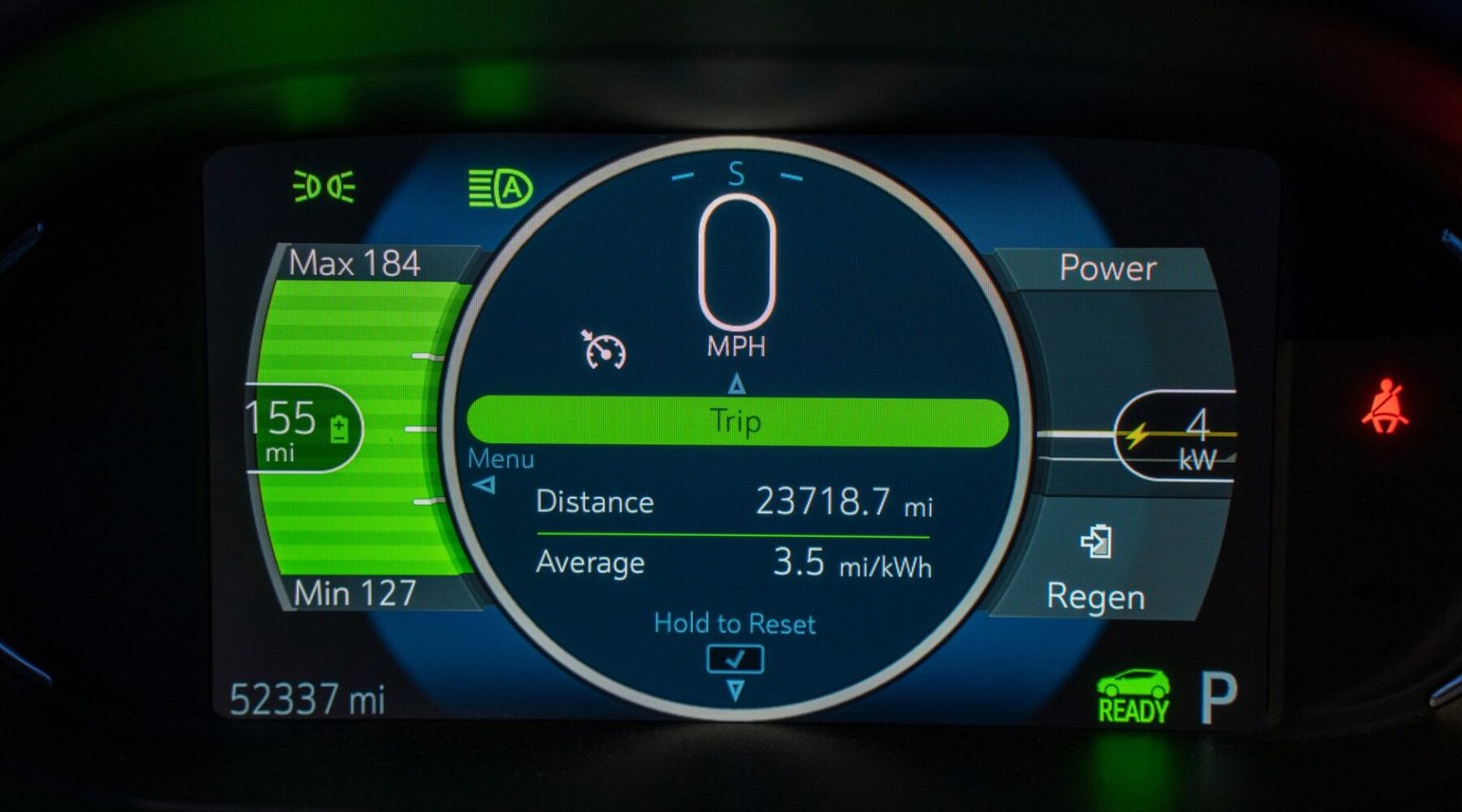
Range anxiety was once the primary obstacle to electric vehicle adoption. Today, battery chemistry, aerodynamics, and thermal management have advanced to the point where single-charge endurance rivals traditional combustion engines. EPA ratings now top five hundred miles for select models, reshaping expectations for long-distance highway travel. Evaluating these vehicles requires looking past theoretical maximums to examine how battery capacity, weight, and drag coefficients combine to produce genuine long-range performance.
The five-hundred-mile benchmark
Lucid Motors currently holds the crown for the longest production electric vehicle range in North America. The Lucid Air Grand Touring achieves an EPA-estimated 516 miles on a single charge when equipped with 19-inch wheels. Powered by a 112-kilowatt-hour battery pack, the vehicle achieves this range through exceptional aerodynamic efficiency, boasting a drag coefficient of 0.197. Its 900-volt electrical architecture also allows rapid replenishment, adding up to 200 miles of range in roughly twelve minutes at a compatible fast charger. Lucid demonstrates that battery size alone does not dictate range; system-wide powertrain efficiency plays an equally critical role.
Premium vehicles maintaining four hundred miles
Directly behind Lucid sits the Tesla Model S. In its base Dual-Motor All-Wheel Drive configuration, the Model S carries an EPA-estimated range of 402 miles. Tesla relies on years of software optimization, efficient permanent magnet motors, and structural battery design to maintain competitiveness despite using a smaller 100-kilowatt-hour pack compared to its competitors.
Another key contender in the utility space is the Rivian R1S equipped with the Dual-Motor drivetrain and Max Pack battery. With an EPA rating of up to 410 miles, Rivian has proven that even large, upright vehicles can achieve exceptional range when paired with a sufficiently large 149-kilowatt-hour battery reserve.
Battery capacity provides the baseline, but aerodynamics and thermal efficiency ultimately determine how far an electric car travels on a single charge.
The Mercedes-Benz EQS 450+ sedan also deserves mention, offering an EPA-rated 352 miles of range. Its teardrop shape yields a 0.20 drag coefficient, allowing its 108.4-kilowatt-hour battery to efficiently push the heavy luxury saloon across long interstate stretches without frequent charging stops.
Accessible efficiency under sixty thousand dollars
Extending driving range is no longer reserved exclusively for six-figure luxury flagships. The Hyundai Ioniq 6 SE Long Range Rear-Wheel Drive delivers an EPA-estimated 361 miles of range at a price point well below the luxury segment. Utilizing Hyundai’s 800-volt E-GMP platform and a 77.4-kilowatt-hour battery pack, the sedan pairs an ultra-sleek silhouette with smart energy management to achieve remarkable efficiency.
Similarly, the Tesla Model 3 Long Range All-Wheel Drive offers an EPA estimate of 341 miles. It remains one of the most efficient vehicles on sale, demonstrating that compact packaging and refined aerodynamics can yield impressive endurance without requiring massive, heavy battery packs.
Real-world variables and practical endurance
EPA estimates provide a standardized metric for comparison, but real-world range inevitably varies based on external conditions. Highway driving speeds, ambient temperatures, wheel selection, and cabin heating usage all draw significant power from the battery pack. Cold weather can reduce total range by twenty percent or more, while larger performance wheels increase rolling resistance and degrade EPA figures substantially. Buyers seeking maximum distance should prioritize smaller wheel options and pay close attention to thermal management systems when selecting a long-range electric vehicle.
Advances in battery technology and their impact on driving range
The driving range of electric vehicles (EVs) is significantly influenced by advancements in battery technology. As manufacturers strive to enhance the efficiency and capacity of their battery systems, the potential for longer ranges becomes a reality. One of the key innovations in this area is the development of solid-state batteries, which promise to revolutionize energy storage and delivery in EVs.
Solid-state batteries replace the liquid electrolyte found in traditional lithium-ion batteries with a solid electrolyte. This change not only enhances safety by reducing the risk of leaks and fires but also allows for a higher energy density. For example, companies like QuantumScape are working on solid-state battery technology that could potentially double the range of current EVs. This would mean that vehicles currently limited to 300 miles of range could achieve upwards of 600 miles on a single charge.
Another significant development is the use of silicon anodes instead of traditional graphite. Silicon can theoretically store ten times more lithium ions than graphite, which could lead to batteries with much greater capacity. Tesla has been investigating this technology, with plans to implement silicon anodes in their future battery cells, aiming for a range increase that could make longer trips more feasible without the frequent need for charging stops.
Fast-charging capabilities are also critical in the context of driving range. With the expansion of ultra-fast charging networks, EVs are becoming more convenient for long-distance travel. For instance, the Porsche Taycan can charge from 5% to 80% in just over 20 minutes at a compatible DC fast charger, providing approximately 250 miles of range in that time. This rapid recharging capability complements the need for longer driving ranges, effectively addressing range anxiety among potential EV buyers.
Furthermore, the role of software in optimizing battery management systems cannot be overlooked. Manufacturers like Ford and Volkswagen are integrating sophisticated software algorithms that monitor battery health and performance, maximizing the range based on real-time driving conditions. These systems can adjust energy consumption based on factors such as terrain and driving style, providing drivers with an accurate estimate of their remaining range and enhancing overall efficiency.
With the continuous evolution of battery technology and charging infrastructure, the future of electric vehicles looks promising, making long journeys increasingly viable for drivers.
As EV technology continues to evolve, manufacturers are also focusing on recycling and sustainability of battery materials. The development of closed-loop recycling systems can reduce the environmental impact of battery production and disposal, ensuring that as EVs become more prevalent, they do not compromise the planet’s health.
In conclusion, while driving range remains a key consideration for potential EV buyers, ongoing innovations in battery technology, charging infrastructure, and software optimization are transforming the landscape. These advancements not only enhance the current offerings but also pave the way for a future where electric vehicles can easily compete with traditional combustion engine vehicles in terms of convenience and usability.
Exploring battery technology advancements
As the competition among electric vehicle (EV) manufacturers intensifies, advancements in battery technology are playing a crucial role in extending driving range. The development of solid-state batteries is one of the most promising innovations in this area. Unlike traditional lithium-ion batteries, which use a liquid electrolyte, solid-state batteries employ a solid electrolyte. This shift not only enhances energy density but also improves safety by reducing the risk of thermal runaway, a phenomenon that can lead to fires in conventional battery packs.
For example, QuantumScape, a California-based startup, has made significant strides in solid-state technology. Their prototype batteries promise to deliver over 400 miles of range on a single charge while maintaining performance in extreme temperatures. Major automakers, including Volkswagen, have invested heavily in QuantumScape, indicating a strong belief in the potential of this technology to revolutionize the EV market.
Another significant advancement is the integration of lithium-sulfur batteries. These batteries have the potential to provide nearly five times the energy density of conventional lithium-ion batteries. Companies like Oxis Energy are at the forefront of this technology, claiming that lithium-sulfur could soon enable EVs to achieve ranges exceeding 600 miles. This could dramatically change consumer perceptions and increase EV adoption, especially in markets where long-range capability is a primary concern.
Moreover, fast-charging technology is evolving alongside battery improvements. The introduction of ultra-fast charging stations, capable of delivering up to 350 kW, can charge compatible EVs to 80% in just 15-20 minutes. This shift not only alleviates range anxiety but also complements the advancements in battery technology, as faster charging can help maintain battery health over time. Companies like Ionity, a joint venture of major automakers, are expanding their network of high-speed charging stations across Europe, further enhancing the feasibility of long-distance travel in electric vehicles.
In addition to these technological advancements, manufacturers are also focusing on energy management systems to optimize battery performance. Tesla has pioneered the use of sophisticated software algorithms that monitor battery health, charge cycles, and temperature to maximize efficiency and longevity. Such systems can significantly extend the usable life of a battery, allowing vehicles to achieve their maximum potential range over many years.
It’s important to note that while range is a critical factor, it is not the only consideration for consumers. Factors such as charging infrastructure, vehicle design, and overall cost also play vital roles in the decision-making process. However, with continuous advancements in battery technology and charging solutions, the landscape of electric vehicles is evolving rapidly. The next generation of EVs is likely to redefine not only how far we can travel on a single charge but also how quickly we can recharge, making electric driving more accessible and practical for everyone.
As we look to the future, the combination of new battery technologies and robust charging networks will be pivotal in driving the electric vehicle market forward.
Exploring the impact of battery technology on range
As electric vehicles (EVs) continue to dominate headlines with their impressive ranges, a deeper understanding of the battery technology behind these advancements reveals how crucial innovations are shaping the future of EV performance. Key developments in battery chemistry and design not only enhance driving range but also influence factors such as charging speed, longevity, and overall efficiency.
One of the most significant advancements in battery technology is the shift from traditional lithium-ion batteries to newer chemistries, such as lithium-silicon and solid-state batteries. Lithium-silicon batteries, for instance, promise to increase energy density, thereby allowing manufacturers to pack more energy into the same physical space. This change could potentially lead to vehicles achieving ranges over 500 miles on a single charge without increasing battery size or weight.
Consider the Tesla Model S, which has become synonymous with long-range EVs. Tesla’s use of advanced lithium-ion cells has allowed the Model S to achieve ranges exceeding 400 miles. However, the company’s ongoing research into lithium-silicon technology could further push those boundaries. By replacing some of the graphite in the anode with silicon, Tesla aims to improve the battery’s energy capacity and lifespan, which could result in longer ranges for future models.
Solid-state batteries are another promising avenue being explored by several manufacturers. Unlike conventional lithium-ion batteries that use liquid electrolytes, solid-state batteries utilize solid electrolytes. This fundamental change can significantly reduce the risk of fire and improve energy density. Companies like Toyota and QuantumScape are at the forefront of this technology, with projections suggesting that production-ready solid-state batteries could bring ranges exceeding 600 miles to the market within the next few years.
“Solid-state batteries could be a game-changer for electric vehicles, not just in terms of range but also safety and charging speed,” says Dr. Alice Chen, an expert in battery technology.
Another aspect influencing range is the vehicle’s weight and aerodynamics. Manufacturers are increasingly leveraging advanced materials, such as carbon fiber and aluminum, to reduce weight without sacrificing structural integrity. For example, the Ford Mustang Mach-E employs a design that optimizes both weight distribution and aerodynamics, which contributes to its overall efficiency and driving range. This multifaceted approach—combining battery technology with engineering design—has led to EVs that are not only capable of longer journeys but also provide a more enjoyable driving experience.
Additionally, battery management systems (BMS) play a critical role in optimizing the performance of electric vehicle batteries. These systems monitor the state of charge, temperature, and overall health of the battery pack, ensuring that the vehicle operates within safe parameters. Advanced BMS can adjust charging rates and optimize usage patterns to extend battery life and enhance the driving range. For instance, the Hyundai Ioniq 5 integrates a sophisticated BMS that allows for ultra-fast charging while maintaining battery integrity, making long-distance travel more feasible.
Finally, as charging infrastructure continues to expand, the concern about range anxiety is diminishing. With fast-charging stations becoming more widespread, the ability to recharge in a matter of minutes allows drivers to travel longer distances without the need for extensive planning. This shift complements advancements in battery technology, creating a synergistic effect that enhances the overall experience of owning an electric vehicle.
In conclusion, the future of electric vehicles is not solely dependent on the vehicles themselves but also on the innovations in battery technology and infrastructure development. As manufacturers invest in research and development, the promise of longer ranges and faster charging will likely reshape the landscape of personal transportation, making electric vehicles an increasingly viable option for all drivers.
Related reading: The best electric cars to buy this year, and Range Anxiety Is Mostly a Math Problem. For an outside reference on this topic, see the Department of Energy's home charging guide.