Modern automobiles are engineering marvels of computing power, complex suspensions, and active safety systems. Yet every electronic stability program and anti-lock braking calibration ultimately depends on four patches of rubber, each roughly the size of a human palm. The sole variable determining how effectively those patches meet the road is internal air pressure. Despite its critical role, tire pressure is routinely overlooked by drivers who rely on automated warnings or visual inspections.
Mechanical grip and emergency braking
A tire relies on pneumatic pressure to maintain its intended structural shape under dynamic loads. When pressure drops below the manufacturer specification, the center of the tread collapses inward. This transfers the vehicle weight disproportionately to the outer shoulders, severely reducing the effective contact patch. In emergency braking scenarios, an under-inflated tire deforms under load, extending stopping distances significantly on both dry and wet pavement.
Conversely, over-inflation causes the center of the tread to bulge outward while lifting the shoulders away from the asphalt. This reduces overall friction and degrades lateral stability during cornering. Correct inflation ensures uniform pressure distribution across the tread width, maximizing traction when directional control matters most.
An under-inflated tire deforms under dynamic load, reducing the usable contact patch precisely when maximum stopping power is required.
Fuel economy and rolling resistance
Under-inflated tires generate excessive rolling resistance. As an under-pressurized tire rotates, its sidewalls flex more aggressively with every revolution. This continuous mechanical deformation converts kinetic energy into wasted thermal energy. The internal combustion engine or electric powertrain must consume additional energy simply to overcome this drag.
According to fuel economy data, tires under-inflated by just six pounds per square inch cause a measurable decrease in fuel efficiency. For electric vehicles, where range efficiency is closely scrutinized, improper tire inflation directly degrades total driving range. Keeping tires at their rated cold inflation pressure remains one of the most immediate ways to maintain optimal efficiency.
Thermal load and tread life
Excessive sidewall flexing does more than waste fuel; it generates destructive internal heat. Heat is the primary enemy of rubber compounds and casing integrity. Running tires significantly below their recommended pressure at highway speeds elevates internal temperatures to levels capable of causing tread separation and catastrophic sidewall failure.
Inflation pressure also dictates wear patterns over time. Under-inflation wears down the outer tread shoulders prematurely, forcing premature replacement even if the center tread retains adequate depth. Over-inflation accelerates wear along the centerline. Maintaining proper pressure ensures even wear across the footprint, protecting your investment and preserving engineered hydroplaning resistance throughout the life of the tire.
The limitation of automated systems
Many modern drivers assume that integrated Tire Pressure Monitoring Systems eliminate the need for manual checks. This assumption is dangerous. Federal regulations typically require TPMS alerts only after pressure drops 25 percent below the manufacturer recommendation. By the time a dashboard warning illuminates, handling performance, fuel efficiency, and safety margins have already suffered substantial degradation.
Ambient temperature changes further complicate passive monitoring. Air pressure drops roughly one pound per square inch for every ten-degree Fahrenheit drop in outside temperature. A tire set correctly in late summer can easily become severely under-inflated by the first winter freeze without ever triggering a threshold warning.
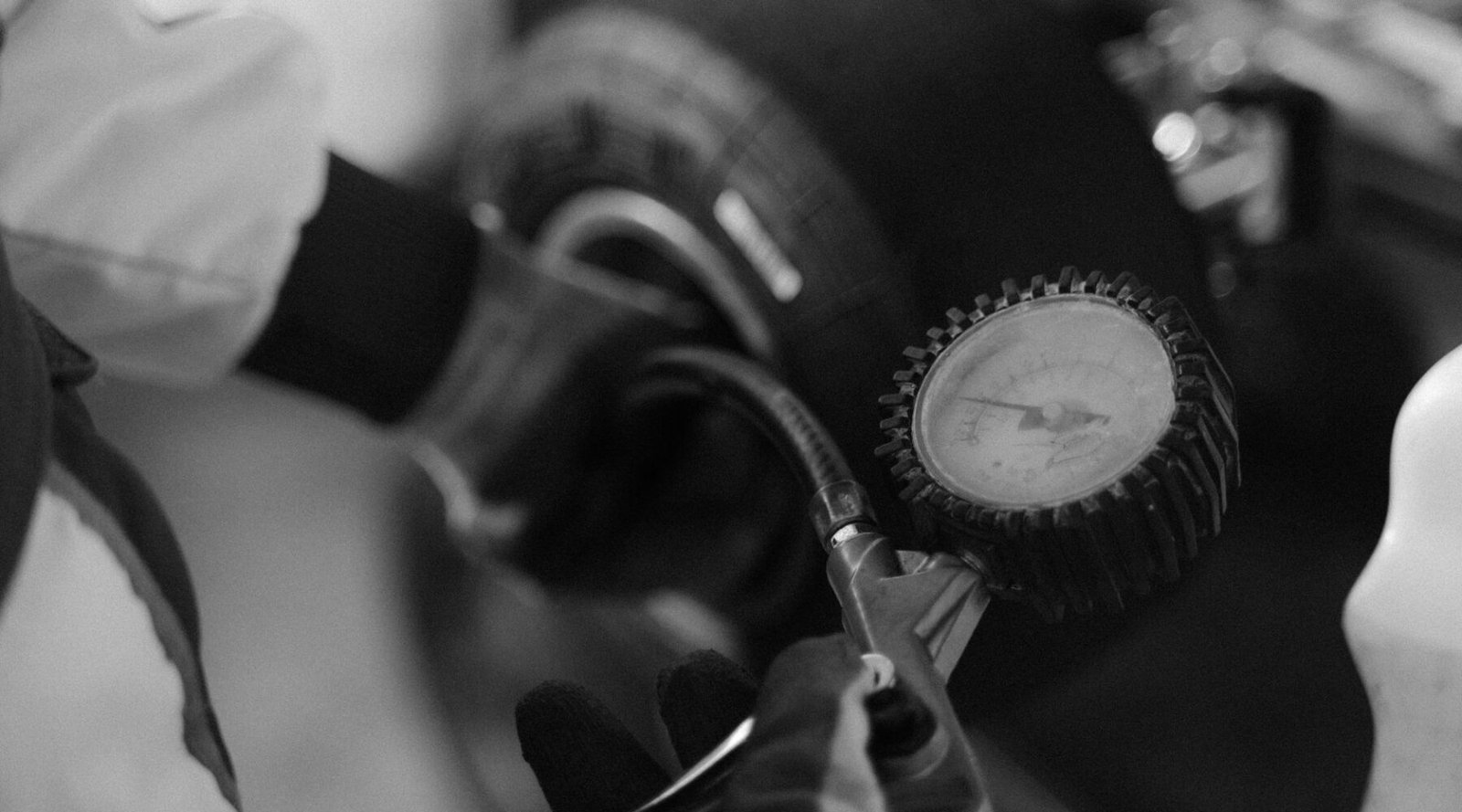
Drivers should check tire pressure manually at least once a month using a calibrated digital gauge. Checks must always be performed when the tires are cold, meaning the vehicle has been parked for at least three hours or driven less than one mile. The correct specifications are found on the driver-side door jamb placard, not on the tire sidewall, which lists only the maximum allowable pressure. Disciplined maintenance of this single variable yields safer handling, longer tire life, and optimized vehicle efficiency.
Understanding the critical balance of tire pressure
Tire pressure is not just a matter of maintaining a specific PSI; it is a delicate equilibrium that affects multiple aspects of vehicle dynamics, including traction, handling, and fuel efficiency. An optimal tire pressure enhances the contact patch—the area of the tire that makes contact with the road—which is crucial for effective grip and stability. When tire pressure is either too low or too high, the dynamics of the vehicle change significantly, leading to various performance issues.
Consider a scenario where the tire pressure is lower than recommended. This condition leads to an increased contact patch, which may initially seem beneficial as it can enhance grip in certain conditions. However, the downside is that it causes the tire to flex more during operation, leading to excessive heat buildup and increased rolling resistance. This not only accelerates tire wear but also negatively impacts fuel efficiency. A study conducted by the National Highway Traffic Safety Administration (NHTSA) indicated that under-inflated tires could lower fuel economy by up to 3.3 percent.
Conversely, over-inflated tires reduce the contact patch, making the vehicle more susceptible to skidding, especially in adverse weather conditions. The rigid nature of the tire can lead to a harsh ride and decreased traction, particularly when cornering. An example from motorsports demonstrates this: race teams meticulously adjust tire pressures based on track conditions and vehicle setup. A slight deviation can result in loss of grip, affecting lap times and overall performance.
“The precision of tire pressure management can mean the difference between winning and losing in competitive racing.”
For everyday drivers, maintaining the correct tire pressure is just as crucial. It is not merely a preventive measure; it is an essential component of safe driving. A vehicle with properly inflated tires is easier to control, responds better to steering inputs, and stops more effectively. This is particularly important during emergency maneuvers, where every fraction of a second counts.
Moreover, the interaction between tire pressure and vehicle dynamics extends beyond just traction and stability. It also influences the vehicle’s suspension system. A well-maintained tire pressure can lead to optimal suspension performance, as the tires work in conjunction with the shocks and struts to absorb road irregularities. This synergy is vital for ride comfort and handling precision. An improperly inflated tire can mislead the suspension system, resulting in an uncomfortable ride and potential long-term damage to components.
Examples from the automotive industry illustrate this principle. For instance, many modern vehicles are equipped with Tire Pressure Monitoring Systems (TPMS), which alert drivers to significant deviations from ideal tire pressure. These systems are not only a convenience but a critical safety feature. When tire pressure is monitored and adjusted, it promotes better fuel efficiency, extends tire life, and enhances overall vehicle performance.
In conclusion, maintaining the correct tire pressure is a fundamental aspect of vehicle dynamics that affects safety, performance, and efficiency. Regularly checking and adjusting tire pressure can lead to significant long-term benefits, including improved traction, better handling characteristics, and enhanced fuel economy. For drivers, a simple habit of monitoring tire pressure can yield profound impacts on their driving experience and vehicle longevity.
The impact of tire pressure on handling and safety
Tire pressure is not just a number to check; it plays a critical role in vehicle dynamics, influencing handling, stability, and overall safety. Proper tire pressure ensures optimal contact with the road, which is essential for effective braking, cornering, and acceleration. Let’s explore how deviations in tire pressure can affect these dynamics.
When tire pressure is too low, the tire’s footprint increases, leading to more surface area in contact with the road. While this might initially seem beneficial for traction, it can lead to excessive flexing of the tire sidewalls. This flexing generates heat, which can cause tire degradation or even blowouts under extreme conditions. Furthermore, a larger footprint can result in increased rolling resistance, which negatively impacts fuel efficiency. For instance, a 10% decrease in tire pressure can reduce fuel efficiency by up to 2%, which adds up significantly over time.
Conversely, over-inflated tires reduce the contact patch, leading to a smaller area in contact with the road. This can compromise traction during critical maneuvers, especially in wet or slippery conditions. The tire can also become excessively rigid, making it more susceptible to impacts from potholes or debris on the road. Drivers may experience a harsher ride and diminished feedback, which can affect their ability to control the vehicle effectively.
“A tire that is too hard will not grip well, especially in corners, and can lead to a loss of control, while a tire that is too soft can lead to excessive wear and even catastrophic failure.”
Additionally, the relationship between tire pressure and vehicle dynamics extends to the vehicle’s center of gravity and roll characteristics. Low tire pressure can cause the vehicle to roll more during cornering, increasing body roll and potentially pushing the vehicle beyond its handling limits. This can be particularly dangerous in high-speed scenarios where quick steering inputs are necessary. On the other hand, over-inflated tires may lead to a higher center of gravity effect, making the vehicle feel unstable during turns and increasing the risk of rollover, especially in SUVs.
Real-world examples underline these points. In a study conducted by the National Highway Traffic Safety Administration, it was found that under-inflated tires contributed to an estimated 660 fatalities and 33,000 injuries annually in the United States alone. These statistics highlight the critical importance of maintaining proper tire pressure not only for performance but also for safety.
Moreover, tire pressure should not only be monitored during routine maintenance but also adjusted according to load conditions. For example, if a vehicle is loaded with additional cargo or towing a trailer, increasing tire pressure to accommodate the added weight is essential for maintaining optimal handling and safety. This adjustment helps in maintaining the tire’s contact patch and ensures that the vehicle’s suspension system operates efficiently under varied loads.
In summary, understanding the nuances of tire pressure goes beyond mere inflation; it is integral to vehicle dynamics, affecting safety, performance, and efficiency. Regular monitoring and adjustments based on load conditions are necessary to achieve the best results, emphasizing that tire maintenance is a crucial aspect of vehicle safety and performance.
Understanding how temperature affects tire performance
Tire pressure is not static; it changes with temperature, which directly impacts vehicle dynamics and performance. As tires heat up during driving—due to friction, ambient temperature, and the load they carry—air molecules within the tire expand, increasing the internal pressure. This phenomenon can significantly alter the tire’s footprint on the road and its overall handling characteristics.
For instance, consider a scenario where a driver maintains a tire pressure of 32 psi at ambient temperatures of 70°F. After a long drive, the tires can heat up to 180°F, causing the pressure to rise to approximately 38 psi. This sudden increase can lead to over-inflation if the driver does not regularly check and adjust tire pressure based on temperature changes.
Maintaining optimal tire pressure according to temperature conditions not only enhances safety but also optimizes fuel efficiency and tire longevity.
The impact of tire temperature is critical when considering performance in different driving conditions. In motorsports, for example, teams meticulously monitor tire temperatures to ensure that they operate within an ideal range. A tire that is too hot may lose grip, leading to understeer, while a cold tire may not reach its optimal performance level, resulting in a lack of traction.
Moreover, the relationship between tire pressure and temperature is not linear. A 10°F increase in temperature can lead to an approximate 1 psi rise in tire pressure, but this can vary based on the tire’s construction and materials. Understanding this relationship allows drivers to make more informed decisions about tire maintenance, particularly in regions with significant temperature fluctuations.
Additionally, different types of tires respond differently to temperature changes. For instance, high-performance tires are designed to operate at higher temperatures and may actually require heat to achieve optimal grip levels. In contrast, standard all-season tires could suffer from excessive heat buildup if not monitored closely, leading to tread wear or blowouts.
Knowledge of the specific tire type and its temperature response characteristics is essential for any driver looking to enhance performance and safety.
To further illustrate, let’s consider two drivers: one who regularly checks tire pressure and adjusts it according to temperature changes and another who ignores this aspect. The first driver finds that their vehicle handles predictably and efficiently, while the second experiences increased stopping distances and reduced cornering stability, primarily due to fluctuating tire pressures. This simple act of monitoring and adjusting tire pressure can lead to significant differences in performance and safety.
Ultimately, awareness of the interplay between tire pressure, temperature, and vehicle dynamics is vital for both everyday drivers and automotive enthusiasts. Regularly checking tire pressure, especially before long trips or during seasonal changes, can help maintain optimal performance and prolong tire life. Moreover, understanding how tire types react to temperature variations can aid in selecting the right tires for specific driving conditions, enhancing both safety and performance on the road.
Related reading: Brake pad compounds dictate stopping performance and noise profiles, and The true five-year cost of car ownership beyond the sticker price. For an outside reference on this topic, see Consumer Reports' car-buying advice.


3 Responses