When considering how many gallons of gas a car holds, it’s essential to understand the factors influencing gas tank capacity. Gas tank sizes vary significantly among different types of vehicles, and knowing the average size can help you plan your driving and fuel efficiency more effectively.
Key takeaways
- The average gas tank capacity for cars ranges from 12 to 15 gallons.
- Larger vehicles like SUVs and trucks can hold up to 30 gallons or more.
- Understanding gas tank capacity helps with planning fuel stops during long trips.
Understanding gas tank sizes
The gas tank is a critical component of any vehicle, designed to store fuel safely and efficiently. Most cars on the market today have gas tanks that range in size from about 10 to 20 gallons, with the average size being around 12 to 15 gallons. However, various factors can influence these numbers, including the vehicle’s design, purpose, and fuel efficiency.
Average gas tank capacities
On average, most compact and mid-sized cars have gas tanks that hold between 12 and 15 gallons. For instance, popular models like the Honda Civic and Toyota Corolla typically fall within this range, allowing for a reasonable driving distance before requiring a refill. Larger vehicles, such as SUVs and trucks, often have more substantial tanks to accommodate their increased fuel consumption. For example, the Ford F-150 can have a fuel tank capacity of up to 36 gallons in some configurations.
Factors influencing gas tank size
Several factors contribute to the variation in gas tank sizes across different vehicle types. The primary considerations include:
- Vehicle type: Trucks and SUVs generally require larger gas tanks due to their heavier weight and higher fuel demands.
- Engine size: Vehicles with larger engines tend to consume more fuel, necessitating a larger tank to maintain an adequate driving range.
- Design considerations: Manufacturers balance size, weight, and aerodynamics when designing vehicles, affecting how much fuel they can carry.
Importance of gas tank capacity
Understanding how many gallons of gas a car holds is vital for several reasons. Firstly, it impacts the vehicle’s driving range, which is the distance you can travel before needing to refuel. A larger gas tank can provide a more extended range, which is particularly beneficial for long-distance travelers or those in rural areas with fewer gas stations.
Driving range calculations
To calculate the driving range based on gas tank size and fuel efficiency, you can use a simple formula:
Driving Range = Fuel Tank Capacity (gallons) × Fuel Efficiency (miles per gallon)
For example, if you have a car with a 15-gallon tank and a fuel efficiency of 30 miles per gallon, your driving range would be:
Driving Range = 15 gallons × 30 mpg = 450 miles
This calculation emphasizes the importance of both tank size and fuel efficiency when planning trips.
Fuel efficiency and its impact on tank size
Fuel efficiency, measured in miles per gallon (mpg), greatly influences how often you need to refuel. Vehicles with higher mpg ratings can travel further on less fuel, reducing the frequency of stops at gas stations. For those who often drive long distances, selecting a car with both a large gas tank and good fuel efficiency can be a game-changer.
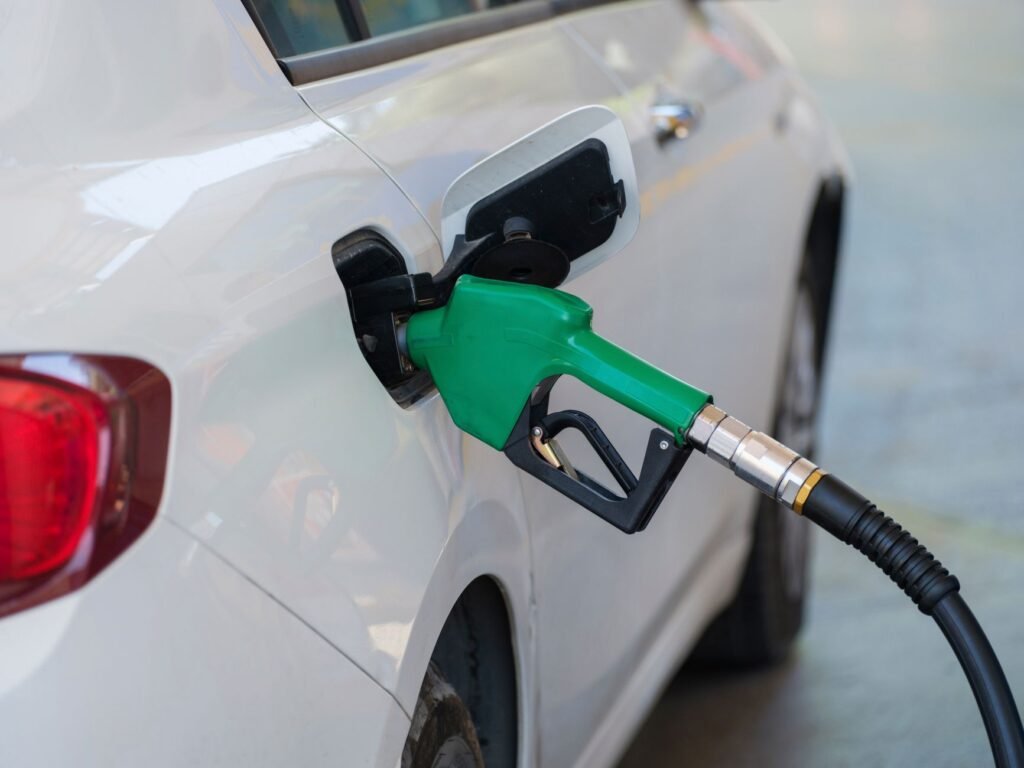
Types of vehicles and their gas tank sizes
Different categories of vehicles have distinct gas tank sizes, which cater to their intended use. Here’s a closer look at how various types of vehicles compare:
Compact and subcompact cars
These vehicles are designed for efficiency and urban driving. Typically, they feature smaller gas tanks, often ranging from 10 to 12 gallons. While this may limit their driving range, their fuel efficiency often compensates for it. For instance, a subcompact car may achieve 35-40 mpg, allowing for a respectable range despite a smaller tank.
Mid-sized sedans
Mid-sized sedans usually have gas tanks that hold between 12 and 16 gallons. These vehicles balance comfort, space, and efficiency, making them suitable for families. Examples include the Toyota Camry and Honda Accord, which provide a good mix of capacity and fuel economy.
SUVs and trucks
SUVs and trucks are built for versatility and power, often featuring larger gas tanks of 20 gallons or more. For instance, the Chevrolet Tahoe can have a tank capacity of around 31 gallons. This larger capacity is essential for towing and off-road capabilities but comes with increased fuel consumption.
Future trends in gas tank design
As automotive technology advances, the design and capacity of gas tanks may evolve. With the growing popularity of electric and hybrid vehicles, traditional gas tank sizes may become less relevant. However, for conventional gas-powered vehicles, innovations such as lightweight materials and more efficient fuel delivery systems could lead to changes in gas tank design.
Impact of electric vehicles
The rise of electric vehicles (EVs) poses questions about the future of gas tank sizes. While EVs do not require gas tanks, hybrids still incorporate them. As more consumers shift toward hybrid options, manufacturers may focus on optimizing gas tank size and efficiency in these vehicles to balance electric and gasoline power effectively.
Conclusion
Understanding how many gallons of gas a car holds is crucial for planning and maximizing fuel efficiency. The average gas tank capacity varies across vehicle types, with compact cars typically holding around 12 to 15 gallons, while larger SUVs and trucks can accommodate much more. By considering tank size and fuel efficiency, drivers can make more informed choices, ensuring they have the right vehicle for their needs.
The impact of gas tank size on driving range and fuel efficiency
When considering gas tank sizes, it’s crucial to examine how they directly influence a vehicle’s driving range and overall fuel efficiency. A larger gas tank allows for longer trips between refueling, which can be a significant advantage for drivers who frequently travel long distances. However, it’s not just the size of the tank that matters; the vehicle’s fuel efficiency plays a vital role in determining how far you can go on a full tank.
For instance, many full-size SUVs, like the Chevrolet Tahoe, come equipped with gas tanks that hold between 24 and 31 gallons. This larger capacity means that, even with a fuel economy of around 18 miles per gallon, a driver can expect a range of approximately 432 to 558 miles per tank. In contrast, smaller vehicles, such as the Honda Civic, typically have gas tanks that hold about 12 to 13 gallons. With an average fuel economy of around 30 miles per gallon, these vehicles can achieve a range of 360 to 390 miles on a full tank.
It’s important to note that while larger tanks may seem advantageous, they can also lead to increased weight and, subsequently, reduced fuel efficiency. For example, heavier vehicles often require more power to operate, which can offset some of the benefits gained from a larger tank. As a result, consumers must consider both tank size and vehicle weight when evaluating their options.
“A vehicle’s fuel efficiency is not solely determined by engine size or design; it also depends on the vehicle’s weight and aerodynamics.”
Additionally, advancements in automotive technology have made it possible for manufacturers to create vehicles that maximize fuel efficiency without sacrificing performance. For example, hybrid vehicles, such as the Toyota Prius, feature smaller gas tanks—around 11.9 gallons—yet they achieve remarkable fuel economy ratings of up to 58 miles per gallon. This allows them to cover an impressive range of roughly 690 miles on a full tank, demonstrating that a smaller tank can be beneficial when paired with efficient technology.
Another factor influencing driving range is the type of driving a vehicle is subjected to. City driving, characterized by frequent stops and starts, typically results in lower fuel efficiency compared to highway driving. For instance, a vehicle that achieves 25 miles per gallon in city conditions might perform at 35 miles per gallon on the highway. Consequently, a driver who primarily uses their vehicle for short city trips may find that a smaller tank is sufficient for their needs, while those who frequently embark on long highway journeys might prefer a larger tank.
Furthermore, the design of a vehicle can impact fuel efficiency. Aerodynamic vehicles, such as the Tesla Model 3, are designed to minimize drag, which improves fuel efficiency and extends driving range. With a battery capacity equivalent to a 15-gallon gas tank and an electric range of around 358 miles, this vehicle showcases how modern advancements can optimize performance despite having a smaller fuel reserve.
Ultimately, when assessing gas tank sizes, consumers should consider their driving habits, the vehicle’s overall weight, and its fuel efficiency. By understanding these factors, drivers can make informed decisions that align with their lifestyle needs, ensuring they choose a vehicle that not only fits their preferences but also maximizes their efficiency and range on the road.
Impact of gas tank size on vehicle efficiency and range
The size of a car’s gas tank significantly influences not only the range a vehicle can travel on a single fill-up but also its overall efficiency. While larger gas tanks allow for extended travel without the need to refuel, they can also add weight to the vehicle, which can decrease fuel efficiency. Understanding this balance is crucial for consumers who prioritize range and efficiency in their vehicles.
For example, consider the differences between two popular vehicles: the Toyota Camry and the Ford F-150. The Camry, with a gas tank capacity of around 15.8 gallons, typically achieves around 28 miles per gallon (mpg) combined. This results in a maximum range of approximately 442 miles on a full tank. In contrast, the Ford F-150, with a larger tank capacity of about 23 gallons, may have a lower combined mpg rating of around 20. This yields a maximum range of about 460 miles. While the F-150 can travel further on a full tank, the trade-off is its lower efficiency due to added weight and aerodynamics.
Additionally, the impact of gas tank size on vehicle weight is a crucial factor often overlooked by consumers. A larger tank means more fuel weight when full, which can affect handling, acceleration, and braking. For instance, a compact car with a smaller gas tank may handle better around sharp turns compared to a larger SUV, which, while having a bigger tank, may experience sluggish acceleration due to the additional weight when the tank is full.
Another aspect to consider is the type of driving one typically does. For urban drivers, a smaller tank might suffice, as they can refuel more frequently and often face stop-and-go traffic that diminishes the importance of range. Conversely, drivers who frequently embark on long road trips or those living in rural areas with fewer gas stations may benefit from larger tanks that provide greater peace of mind and fewer stops for fuel.
“When choosing a vehicle, it’s essential to consider how gas tank size aligns with your driving habits and needs.”
Fuel tank technology is also evolving, with manufacturers exploring alternative fuels and hybrid systems that can influence the need for traditional gas tank sizes. For example, plug-in hybrids may have smaller gas tanks since they rely more on electric power. This shift can change the landscape of what consumers consider optimal in terms of fuel capacity. As electric vehicles (EVs) become more prevalent, understanding the relationship between conventional gas tank sizes and overall vehicle efficiency will be pivotal in making informed decisions about future purchases.
Ultimately, choosing the right gas tank size goes beyond just numbers. It involves understanding personal driving patterns, the type of vehicle, and the balance between efficiency and range. While larger tanks may seem advantageous at first glance, they come with their own set of challenges that can impact the overall driving experience.
Understanding fuel tank capacity variations
When considering gas tank sizes, it is essential to understand that tank capacity can significantly influence a vehicle’s design, efficiency, and overall driving experience. Different types of vehicles cater to varying needs and preferences, which leads to a wide range of fuel tank sizes. For instance, compact cars generally have smaller tanks, typically ranging from 10 to 14 gallons, while larger SUVs and trucks can have tanks that exceed 30 gallons. This section aims to explore how tank sizes relate to vehicle type, performance, and fuel efficiency.
Compact cars, such as the Honda Civic or Toyota Corolla, are designed for urban commuting and efficiency, which is why they feature smaller gas tanks. The smaller capacity means less weight, which can enhance fuel economy. For example, the 2022 Honda Civic has a fuel tank capacity of 12.4 gallons, allowing it to achieve up to 42 miles per gallon on the highway. This efficiency is ideal for city drivers who prioritize fuel savings over long-distance travel.
On the other hand, larger vehicles like pickup trucks or SUVs, such as the Ford F-150 or Chevrolet Tahoe, often come equipped with larger tanks to accommodate their intended use. These vehicles are designed for towing, hauling, or off-road capabilities where longer ranges are advantageous. The 2022 Ford F-150, for instance, offers a fuel tank size of up to 36 gallons, which, while it may result in lower fuel efficiency per gallon, allows for extended driving ranges without frequent refueling stops.
“The choice of fuel tank size is often a balancing act between convenience and efficiency, influenced by the driver’s intended use of the vehicle.”
While size is a critical factor, it is also important to consider the type of fuel used. Vehicles designed for diesel, like the Ram 2500, often have larger tanks compared to their gasoline counterparts. Diesel engines are generally more fuel-efficient and can travel further on a gallon of fuel, making a larger capacity tank more practical. The 2022 Ram 2500 can have a tank size of up to 31 gallons, allowing for longer intervals between refuels, which is particularly beneficial for long-haul drivers.
Moreover, manufacturers have begun to innovate with fuel tank designs to enhance efficiency and safety. Some vehicles now feature multi-tank systems or tank shapes optimized to maximize space without compromising the vehicle’s structural integrity. For example, the Tesla Model X, an electric vehicle, uses a battery pack that is integrated into the chassis, effectively serving a similar purpose as a traditional gas tank in terms of weight distribution and safety.
In addition, understanding the relationship between tank size and fuel economy can also inform purchasing decisions. A larger tank may not always mean better range if the vehicle is inefficient. For instance, while a truck may have a larger tank, if its fuel economy is low, it might not offer a significant advantage over smaller vehicles with better mileage. Thus, prospective buyers should assess fuel economy in conjunction with tank size to determine the most suitable option for their driving needs.
Ultimately, understanding how gas tank sizes vary among vehicles helps consumers make informed choices based on their driving habits, vehicle type, and economic considerations. By carefully evaluating tank capacity alongside fuel efficiency, consumers can select a vehicle that best aligns with their lifestyle and driving requirements.
Frequently asked questions
What is the average gas tank size for a car?
The average gas tank size for most cars is between 12 to 15 gallons. However, this can vary based on the make and model of the vehicle.
How does gas tank size affect driving range?
A larger gas tank allows for a longer driving range before needing to refuel. However, this also depends on the vehicle’s fuel efficiency.
Are there cars with smaller gas tanks?
Yes, some compact and subcompact cars may have smaller gas tanks, sometimes around 10 gallons, to prioritize weight and efficiency.
The bottom line
Understanding gas tank sizes helps drivers make informed fuel choices. Choose your vehicle based on your driving needs and fuel efficiency preferences.
Related reading: Why Automakers Are Racing to Bring Back the Manual Transmission, and Car smells like burning rubber: causes and solutions. For an outside reference on this topic, see Reuters' autos and transportation coverage.