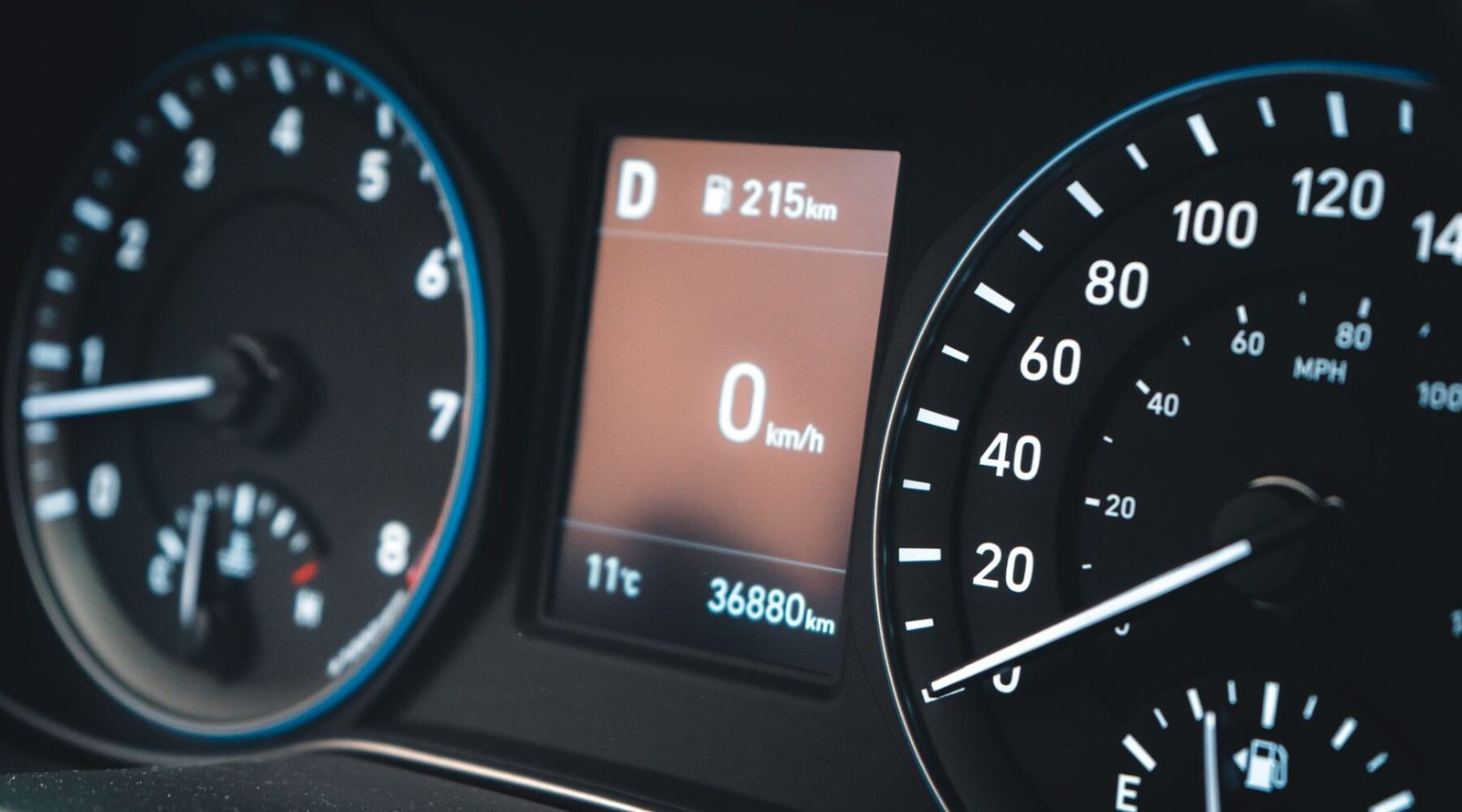
For more than half a century, the zero-to-sixty mile-per-hour test has served as the definitive automotive yardstick. It is the number quoted on spec sheets, featured across advertisements, and debated in enthusiast circles. Yet, despite its ubiquity, a published zero-to-sixty figure rarely represents what a driver will experience behind the wheel of a production car on a standard road.
The physics of the benchmark
At its core, accelerating a vehicle from a standstill to sixty miles per hour is an exercise in managing friction, weight transfer, and torque delivery. Power output alone does not dictate the result. The initial fraction of a second relies almost entirely on tire traction and chassis setup. When a car launches, weight shifts to the rear, altering available grip. Modern all-wheel-drive systems and advanced traction control algorithms manage this transfer by calculating wheel slip thousands of times per second, metering power to prevent wheelspin without bogging down the engine.
Transmissions play a decisive role as well. Dual-clutch automatics execute gear changes in milliseconds, maintaining uninterrupted forward momentum, whereas traditional manual gearboxes introduce human delay and physical interruptions in power delivery that add tenths to the final clock.
Electric vehicles have fundamentally altered this dynamic. Internal combustion engines must build boost or climb into their powerband to deliver peak torque, requiring complex launch control sequences and aggressive transmission tuning. Electric motors generate maximum torque at zero revolutions per minute. This instant delivery allows electric vehicles to achieve rapid low-speed acceleration with consistent repeatability, free from the mechanical thermal stress that degrades traditional powertrains during consecutive launches.
The hidden advantage of rollout
When comparing published numbers across different publications and manufacturer spec sheets, the underlying testing methodology is rarely identical. The most significant discrepancy stems from a drag strip convention known as one-foot rollout. On an American drag strip, the timing clock does not start when the vehicle first moves. Instead, the timer triggers after the front tire rolls out of the staging beam, covering roughly twelve inches of forward motion before timing begins.
Subtracting this first foot of travel ignores the initial inertia-breaking phase of acceleration. In physical terms, the vehicle is already traveling between six and ten miles per hour when the clock officially starts. Accounting for rollout reduces reported times by roughly two to three tenths of a second. While American automotive media routinely apply rollout correction to mimic drag strip conditions, European testing standards typically measure true standing-start acceleration from absolute zero velocity. Consequently, a single car can yield noticeably different advertised times depending on where and how the data was gathered.
Street reality versus controlled testing
Beyond rollout, published figures reflect ideal environmental variables that drivers cannot easily replicate. Media outlets and automakers test vehicles on prepped surfaces coated in traction compound, or on pristine asphalt using specialized tires inflated to precise pressures. Ambient temperature, elevation above sea level, and humidity also play crucial roles. Internal combustion engines lose density-dependent horsepower as air grows warmer or higher in altitude.
A vehicle capable of breaking the three-second barrier on a prepped track may spin its tires fruitlessly on cold street pavement. Traction limits, far more than engine output, dictate real-world outcomes from a standing stop.
Furthermore, activating launch control often requires a specific sequence of drive modes, brake pedal pressure, and engine temperatures. It is a feature engineered for controlled demonstration, not spontaneous merging onto a highway.
Ultimately, the zero-to-sixty sprint measures a narrow slice of performance. In daily driving, in-gear acceleration from thirty to fifty or fifty to seventy miles per hour offers a far more accurate representation of usable power. While the classic metric remains a valuable tool for comparing peak output engineering, it remains a heavily optimized benchmark rather than an absolute promise of street capability.
Tire technology and its critical role in zero to sixty performance
When discussing zero to sixty acceleration, much attention is given to engine power and drivetrain layout. However, the often-overlooked factor is tire technology, which plays a vital role in translating that power into forward motion. The grip provided by tires during acceleration is crucial, as it determines how effectively a vehicle can transfer its power to the road without losing traction.
Tires are engineered with specific compounds and tread patterns that significantly affect their grip levels. For instance, high-performance tires use softer rubber compounds, which provide a greater contact patch and enhanced grip at higher temperatures. This is particularly important during rapid acceleration, where maintaining traction is essential to minimize wheel spin. Brands like Michelin and Pirelli have invested heavily in research to develop tires that excel in these conditions, often resulting in tires that can withstand the intense forces experienced during a full-throttle launch.
“The tire’s ability to withstand deformation under load is key to achieving optimal grip during acceleration.”
Moreover, the dimensions of the tire, including width and sidewall height, affect its ability to maintain traction. Wider tires generally provide a larger contact area, which can improve grip, but they also come with drawbacks such as increased weight and rolling resistance. Conversely, narrower tires may reduce drag and improve fuel efficiency but can compromise grip during rapid acceleration. The balance between these factors is critical for manufacturers aiming to optimize zero to sixty times.
Another aspect of tire technology that influences acceleration is the aspect ratio, which refers to the height of the tire’s sidewall relative to its width. A lower aspect ratio typically means a stiffer sidewall, allowing for quicker response times and reducing the risk of tire deformation under hard acceleration. For instance, performance cars often feature tires with an aspect ratio of 30 or 35, compared to standard vehicles which may have ratios closer to 55 or 60. This design choice enhances handling and stability during aggressive driving maneuvers, including rapid acceleration.
Temperature management is another critical factor. Tires perform best within a specific temperature range; cold tires can lead to reduced grip, while overheated tires can suffer from a loss of performance. Many performance vehicles now come equipped with tire temperature monitoring systems, allowing drivers to optimize their launch conditions. Some racing teams even use tire warmers to ensure that their tires are at the optimal temperature before a race, further enhancing their initial acceleration capabilities.
“Understanding tire performance under various conditions can provide insights into how to improve a vehicle’s zero to sixty acceleration times.”
In conclusion, while engine power and drivetrain configuration are significant factors in zero to sixty acceleration, the importance of tire technology cannot be overstated. High-performance tires with the right compound, dimensions, and characteristics can significantly improve a vehicle’s ability to accelerate from a standstill. As innovations in tire technology continue to evolve, they will further shape the landscape of performance vehicles, offering new ways to optimize not just speed, but also safety and control during rapid acceleration.
Understanding the impact of environmental and mechanical variables on acceleration
When evaluating zero to sixty acceleration times, it is essential to consider not just the vehicle’s specifications but also the myriad of external factors that can significantly influence performance. These variables encompass environmental conditions, tire composition, and even the surface on which the vehicle accelerates.
One of the most critical environmental factors is temperature. Cold temperatures can affect engine performance and tire grip. For instance, on a chilly winter morning, a vehicle may struggle to reach optimal operating temperature, resulting in less efficient fuel combustion and diminished power output. Moreover, cold tires do not provide the same level of traction as warm ones, potentially elongating acceleration times. Conversely, during warm weather, tires achieve better grip due to increased rubber flexibility, enhancing acceleration performance.
Another vital consideration is humidity. High humidity can reduce air density, which affects the engine’s intake of oxygen and, consequently, its power output. This phenomenon is particularly relevant for naturally aspirated engines, which rely heavily on atmospheric pressure to draw in air. Turbocharged engines, while benefiting from forced induction, can also experience fluctuations in performance based on humidity levels.
The type of surface on which a vehicle accelerates plays a crucial role in determining its zero to sixty times. Different surfaces, such as asphalt, concrete, or gravel, offer varying levels of traction. For example, a vehicle accelerating on a well-paved asphalt track will likely achieve better times compared to one on a loose gravel road. This is due to the difference in grip levels, which can lead to wheel spin and loss of momentum.
Tire composition and design are also pivotal in optimizing acceleration. Tires designed for performance typically have a softer compound that provides better grip at the expense of durability and fuel efficiency. In contrast, all-season tires may offer a more balanced performance across different conditions but often compromise on maximum acceleration potential. Therefore, the choice of tires can directly affect zero to sixty acceleration results.
Additionally, mechanical variables such as drivetrain configuration can have a substantial impact. All-wheel drive (AWD) systems tend to outperform rear-wheel drive (RWD) setups in terms of acceleration from a standstill, particularly in adverse weather conditions. AWD systems distribute power more evenly across all four wheels, minimizing wheel slip and maximizing traction. In contrast, RWD vehicles may experience power loss due to excessive wheel spin, leading to slower acceleration times.
Furthermore, the calibration of the vehicle’s electronic stability control (ESC) and traction control systems can dramatically influence acceleration. These systems are designed to prevent wheel spin during hard acceleration, but overly aggressive settings can hinder performance by cutting power too early or too harshly. This balance between control and performance is finely tuned in high-performance vehicles, allowing them to achieve optimal zero to sixty times.
In practical terms, automotive manufacturers often conduct extensive testing under controlled conditions to produce the most favorable acceleration figures. However, understanding the impact of these variables can help consumers make informed decisions and set realistic expectations for performance in real-world scenarios.
Tire technology and its impact on zero to sixty times
When assessing a vehicle’s zero to sixty acceleration, the often-overlooked component is the tires. While engine power and weight distribution are critical, the role of tire technology is paramount in translating that power to the ground effectively. Tire composition, tread design, and temperature can significantly affect acceleration performance.
The rubber compounds used in high-performance tires are engineered to provide maximum grip under various conditions. For instance, softer compounds offer better traction but may wear out faster, while harder compounds provide durability at the cost of grip. This trade-off is essential for manufacturers aiming for optimal acceleration without compromising longevity. Brands like Michelin and Pirelli have developed specialized tire lines solely for performance vehicles, emphasizing the importance of tire selection in achieving competitive zero to sixty times.
“A vehicle’s acceleration is only as good as the contact it makes with the road.”
Tread design also plays a critical role. Tires with a more aggressive tread pattern can channel away water and increase friction with the surface, enhancing performance during wet conditions. Conversely, slick tires, often used in drag racing, maximize contact with the pavement, allowing for quicker acceleration on dry surfaces. This is why many performance-oriented cars come equipped with summer tires that prioritize dry grip, sacrificing all-weather versatility.
Temperature is another factor that can dramatically influence tire performance. Tires need to reach an optimal operating temperature to provide the best grip. This is why many racers will warm up their tires before a run to ensure they achieve the desired level of traction. In everyday driving, this aspect is less critical but still noteworthy; a cold tire can significantly increase the zero to sixty time due to reduced grip. Understanding this can lead to better performance in real-world driving scenarios.
Furthermore, tire pressure is crucial. Under-inflated tires can increase rolling resistance and reduce the contact patch with the road, leading to slower acceleration times. Conversely, over-inflated tires can lead to a smaller contact patch and loss of grip. Maintaining optimal tire pressure is a simple yet effective way to enhance a vehicle’s performance metrics including zero to sixty times.
“The right tire can make the difference between a respectable time and a record-breaking run.”
In performance testing, the choice of tires can sometimes overshadow the vehicle’s raw specifications. For example, the Tesla Model S, known for its impressive zero to sixty times, benefits significantly from its specialized tire technology. When equipped with the appropriate performance tires, the Model S can achieve astonishing acceleration figures, showcasing how tire technology can complement the vehicle’s engineering.
In summary, while many focus on horsepower and drivetrain configuration when evaluating zero to sixty acceleration, the importance of tire technology cannot be overstated. From rubber composition to tread design and temperature management, tires are a critical link in the chain of performance. Understanding their role offers deeper insights into vehicle dynamics and can lead to improved performance in both competitive and everyday driving scenarios.
Related reading: The physical limits of modern production car top speeds, and What a Track Day Actually Teaches You About Your Daily Driver. For an outside reference on this topic, see NHTSA's vehicle safety resources.



3 Responses